
Routine and manual workers face some of the highest health risks and some of the biggest barriers to prevention. Essex County Council and Essex Working Well brought health checks directly into workplaces across the county, engaging more than 1,400 people, uncovering significant unmet need and helping individuals access support they may never otherwise have received.
Commissioned by Essex County Council Public Health and delivered through Essex Working Well, the programme brought SISU Health Stations into workplaces across the county, making preventative health support available in places people already visited every day.
The results revealed something important: the challenge was not persuading people to engage with prevention. It was making prevention accessible in the first place.
Between March and September 2025, the programme delivered 1,654 health checks across 30 workplace installations and 11 business events, uncovering previously unidentified health risks, generating referrals into support services and providing valuable insight into the heath needs of Essex’s workforce.
Programme highlights include:
- 1,654 health checks completed across Essex workplaces
- 59% had not checked their blood pressure within the previous 12 months
- 264 people were advised to seek further support for raised blood pressure
- 68% reported making positive lifestyle changes following a health check
- 87% of people with Very High or Severe blood pressure readings successfully contacted for follow-up advice
- 30% engaged in smoking cessation services or quit smoking completely
- 55% male engagement – a much larger proportion than standard health checks
The challenge – Prevention was available, but access remained a barrier
Essex County Council and Essex Working Well were not starting from scratch.
Health checks, smoking cessation services, weight management support and wider wellbeing programmes were already available across the county. The challenge was reaching the people who would benefit most from accessing them.
For many employees, preventative healthcare simply did not fit around working life. Shift patterns, operational roles and time pressures made attending appointments difficult, while some workers would need to take time away from work or sacrifice earnings to access support.
As Lyn Mowforth, Essex Working Well Manager, explains:
More than 50% of adults don’t attend their over-40s health check. The number of times people said, ‘I got the invitation but it’s still sitting on the side’ was incredible.
The barriers were not always practical. Many people were reluctant to engage with healthcare at all. Some worried about what a health check might uncover. Others assumed making changes to improve their health would be difficult or overwhelming.
People often don’t want to know. They’re worried about what the results might tell them or they think the changes they’ll need to make are too big. What we found was that when you make it easy and accessible, people do engage.
Essex Working Well had also identified a wider challenge.
Traditional workplace health initiatives could be difficult to deliver consistently across operational environments, particularly where employees worked shifts, travelled between locations or spent little time at a desk. Reaching these audiences at scale required a different approach.
The question was no longer whether prevention services existed. It was how to make them accessible to the people most likely to miss out.
The solution – Bringing prevention into the daily work routine
Rather than asking people to find time for a health check, Essex County Council and Essex Working Well took a different approach: bringing preventative health directly into workplace environments.
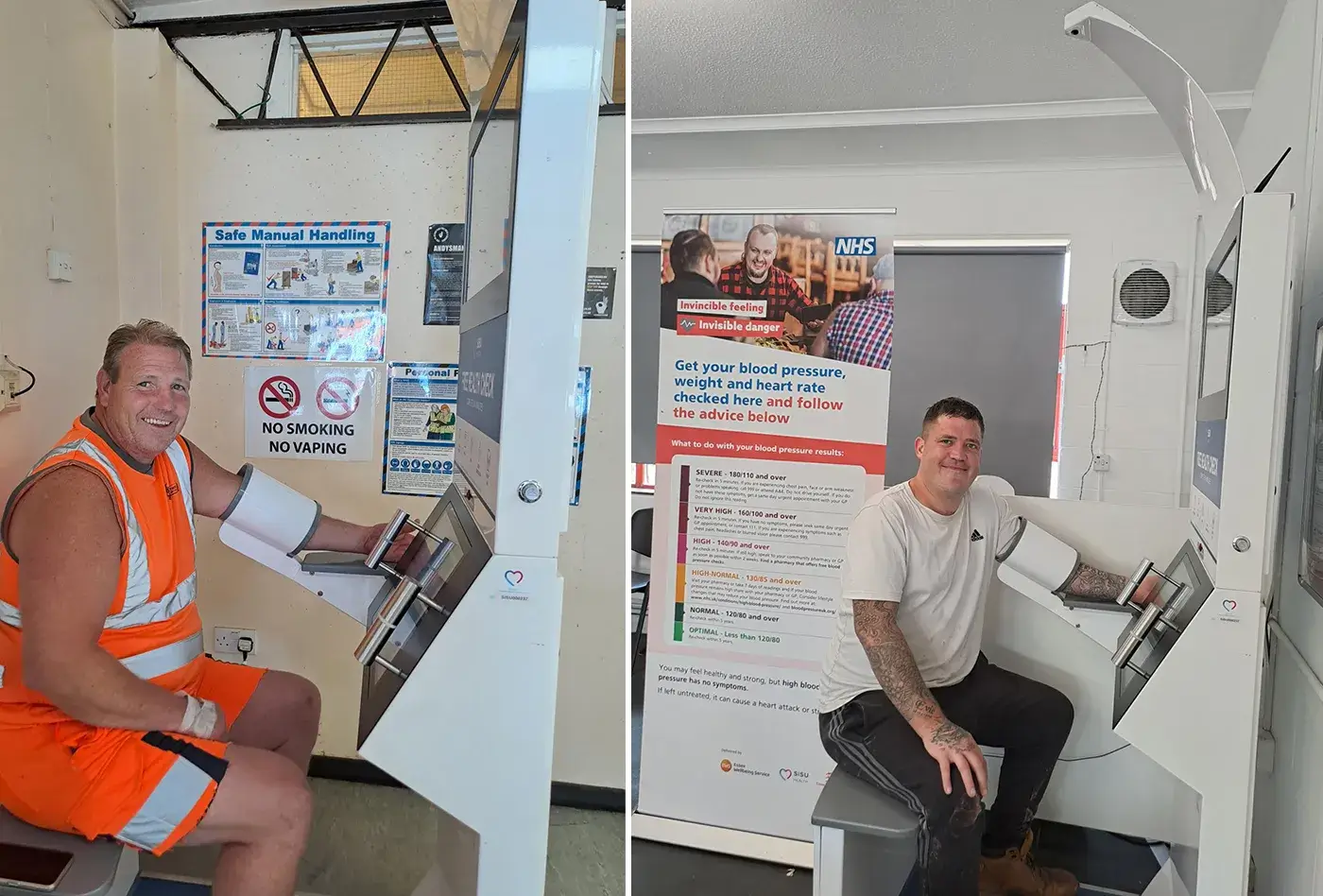
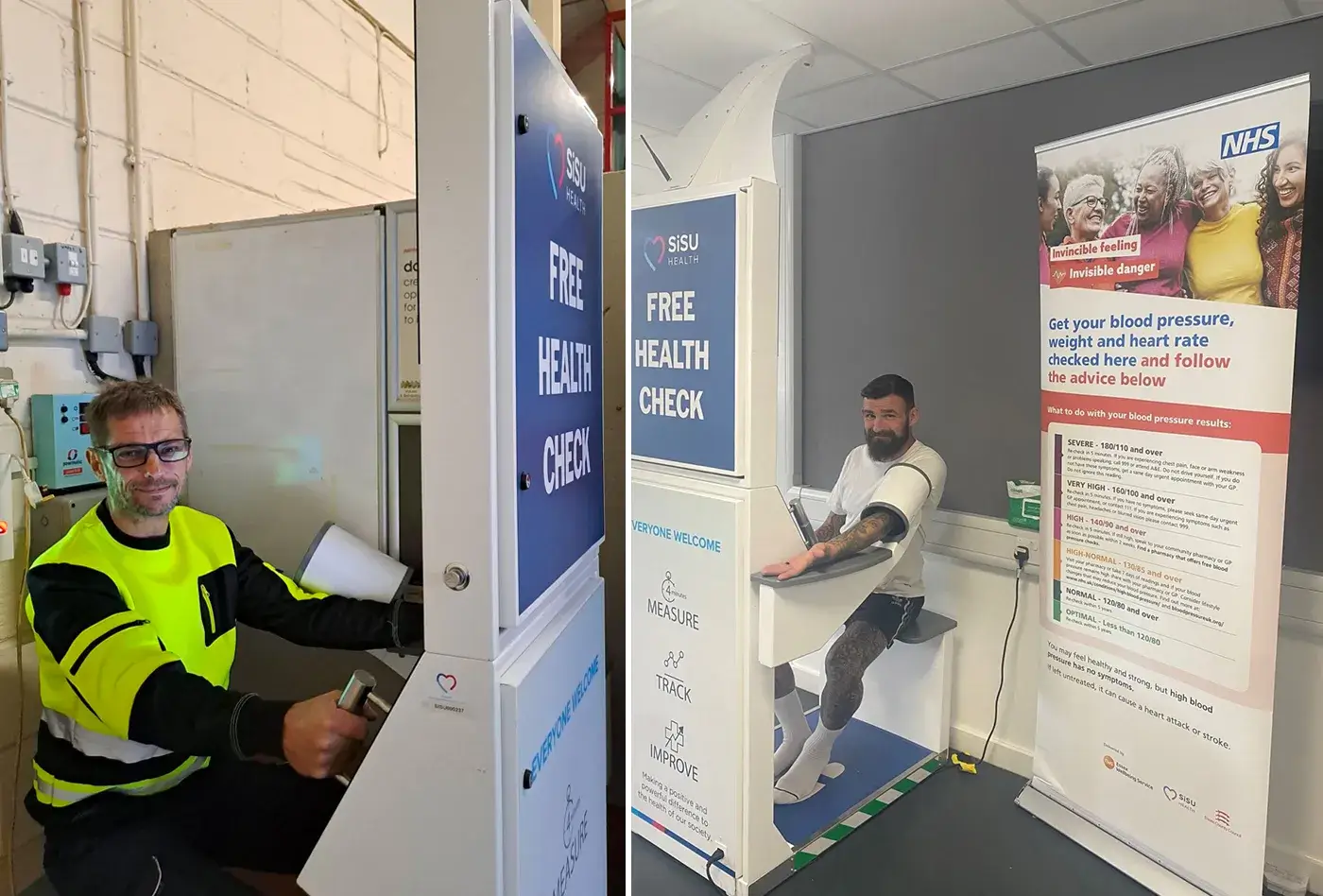
SISU Health Stations were deployed across a wide range of sectors including waste management, manufacturing, logistics, rail, retail, care and construction, making health checks available within people’s normal working day.
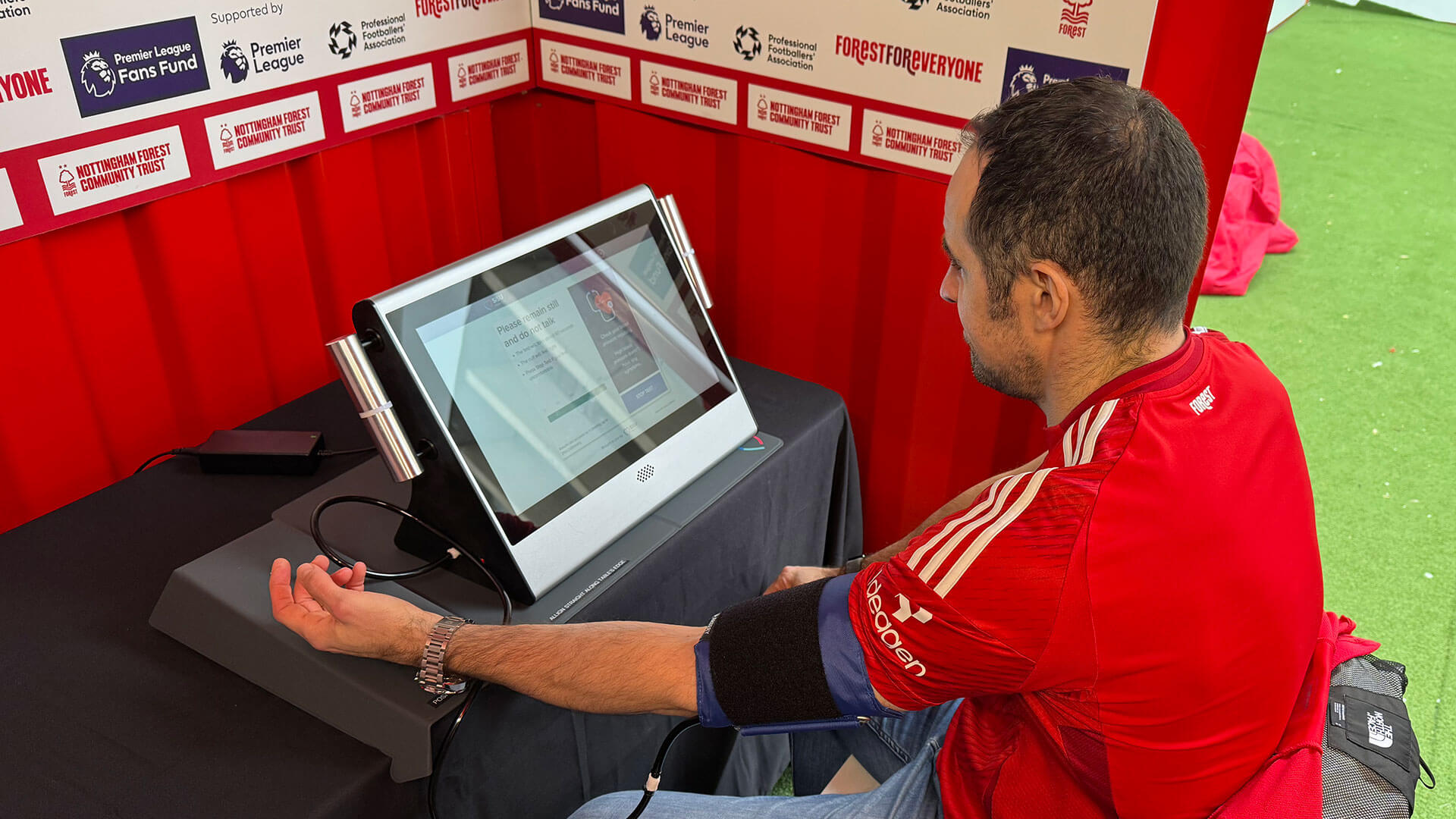
Employees could complete a free health check in around five minutes, receiving immediate insight into key health indicators such as blood pressure, body composition, cardiovascular risk factors, smoking status and perceived stress levels.
The simplicity of the experience was important. Health checks could be completed during breaks, before shifts, after shifts or at other convenient times, helping remove many of the practical barriers associated with traditional appointments.
The self-service format also helped address a different challenge: engagement.
As Lyn Mowforth explains:
Male employees were more likely to engage because it was anonymous. Nobody was going to tell them off. It was a five-minute check rather than a thirty-minute appointment.
For many participants, convenience was only part of the appeal. The stations provided a private, accessible and non-judgemental way to better understand their health, encouraging people who may have never booked a traditional health check to take part.
Importantly, the programme was designed to do more than identify risk. Clear referral pathways were established into smoking cessation services, weight management programmes, community pharmacy support and primary care – ensuring participants could access the right support when further action was needed.
The impact – Reaching more people, identifying hidden risks and driving action
The programme demonstrated what can happen when preventative health is designed around people’s lives rather than expecting people to fit around traditional services.
Over a six-month period, the programme:
- Delivered 1,654 health checks
- Engaged 1,420 individuals
- Reached employees across 30 workplace installations and 11 business events
- Completed 23.3% of health checks outside normal GP opening hours
- Engaged a workforce that was 55% male, with more than 30% under 40 years old
The programme also helped Essex Working Well engage organisations that had previously been difficult to reach.
Around half of participating employers were completely new to the programme, creating opportunities to introduce wider workplace wellbeing support and build longer-term relationships.
As Lyn Mowforth, Essex Working Well Manager, explains:
This gave us a way into workplaces that may never have engaged with us otherwise. Sometimes employers see a full wellbeing programme as a big commitment. A health check is simple. Once they’re engaged, the conversation becomes much easier.
Beyond engagement, the programme uncovered significant unmet health need across participating workplaces.
Key findings included:
- 69.9% of participants were overweight or obese
- 19.3% recorded high blood pressure
- 14.9% smoking prevalence across the programme, higher than both the Essex and national averages
- Smoking prevalence as high as 34% within some workplaces
- 59% had not checked their blood pressure within the previous 12 months
For Essex Working Well, one of the most significant findings was the number of people with elevated risk factors who were completely unaware of their health status.
The number of people under 40 with significant risk factors and no symptoms really stood out. It demonstrated just how important these opportunistic interventions can be.
Importantly the programme was designed to do more than identify risk. Clear referral pathways helped connect participants into appropriate support and encourage positive behaviour change.
During the evaluation period:
- 264 individuals were advised to seek further support for raised blood pressure
- 80 referrals were generated into smoking cessation services
- 180 referrals were generated into weight management support
- 30% of referred smokers had quit or were actively quitting by the end of the pilot
- 39.6% of contacted individuals enrolled in weight management programmes
The impact extended beyond referrals. Surveys found that:
- 68% reported making positive lifestyle changes following a health check
- 54.5% improved their diet
- 41% increased physical activity
- Around 10% sought additional healthcare support they had not previously planned to access
One health check, one potentially life-saving intervention
In one case, a workplace health check identified dangerously high blood pressure in an individual who felt completely well. After following the recommended pathway, hospital clinicians informed him that his condition had placed him at immediate risk.
A year later, he had lost weight, improved his diet, accessed additional support and significantly improved his health.
He told us the programme had saved his life. That’s why we do what we do.
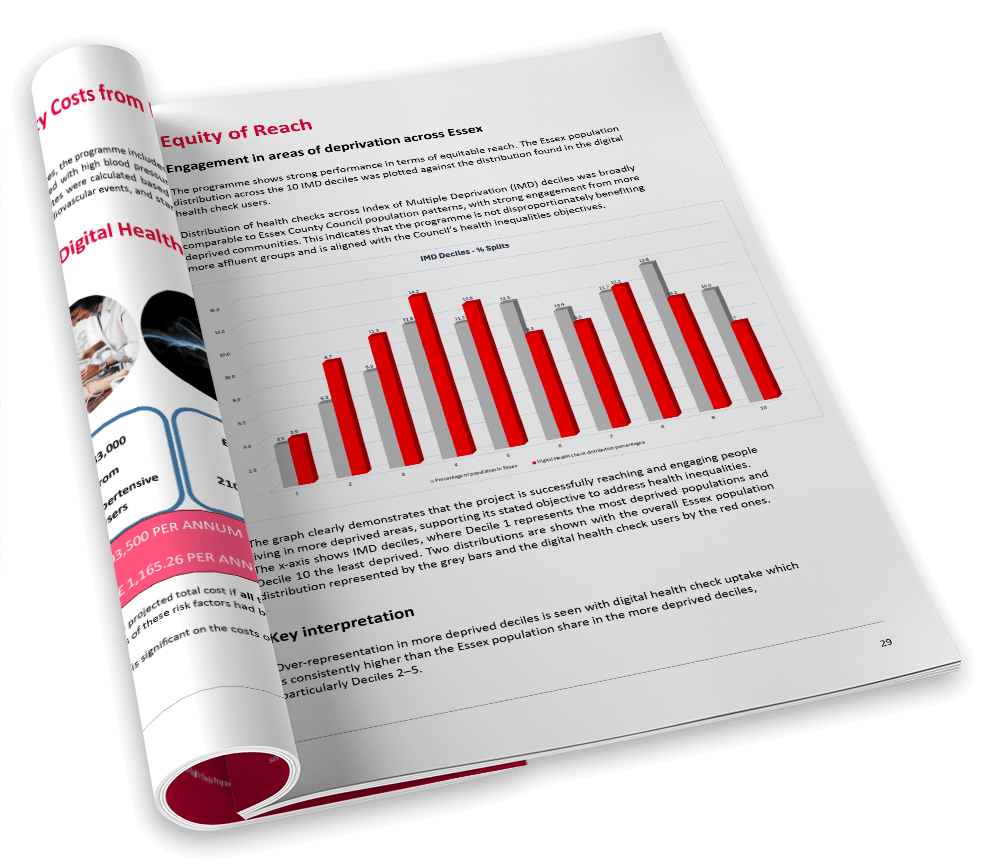
Dive deeper into the results
Read the full evaluation report to explore the data, outcomes and lessons learned from the Essex programme.
Strategic value – Creating a gateway into wider workplace wellbeing
The value of the programme extended far beyond the health checks themselves.
For Essex Working Well, the stations became a powerful engagement tool, helping start conversations with employers that may never previously have engaged with workplace wellbeing support. Around half of participating organisations were new to Essex Working Well, creating opportunities to build longer-term relationships and introduce additional health and wellbeing initiatives.
For many, it’s the first time in work they’ve ever been able to access anything.
The programme also provided employers with a clearer understanding of the health needs of their workforce. Anonymous reporting and workforce-level insights helped organisations identify key health risks and take practical action in response.
As a result, employers introduced initiatives including:
- Workplace blood pressure monitoring schemes
- Smoking cessation drop-in clinics
- Wellbeing champion programmes
- Targeted health promotion campaigns
- Wider engagement with Essex Working Well services and accreditation
Importantly, the findings also helped Essex County Council and Essex Working Well better understand where support was needed most. Variations in smoking prevalence, cardiovascular risk factors and workforce health profiles created opportunities to target future interventions more effectively and ensure resources were directed where they could have the greatest impact.
As Lyn explains:
It’s not just about putting a unit into a workplace. It’s the start of a longer-term health and wellbeing journey.
The programme has since become an embedded part of Essex Working Well’s offer to employers and continues to inform future service development, referral pathways and prevention strategies.
By creating a practical and scalable way to engage people who are often overlooked by traditional approaches, the programme demonstrated how workplace-health prevention can help organisations, communities and public health teams move from insight to action.
Prevention works best when people can actually access it
Traditional prevention programmes can only deliver impact if people engage with them.
By bringing preventative health directly into workplaces, Essex County Council and Essex Working Well reached people who might otherwise have missed out on health checks, identified hidden health risks earlier and connected more individuals into meaningful support.
If you’re looking to improve access, engage underserved populations and deliver prevention in places people already live, work and spend their time, talk to our team about how SISU Health could support your goals.

Client Profile
Essex Working Well
As part of the Essex Wellbeing Service, Essex Working Well provides free workplace health and wellbeing support to employers across Essex, working in partnership with Essex County Council.
Transform prevention and early detection in your community
Work with us to deliver accessible, data-driven health solutions that reach underserved groups and support public health goals.