
East Suffolk Council launched a two-year health check programme in April 2026. It currently uses three SISU Minis across workplaces and community organisations, with five fixed Health Stations planned for the next phase. The Minis have delivered 413 checks to date, generating early insight that is already shaping where stations are placed and how the programme is delivered.
For a rail track worker in Lowestoft, a port health employee in Felixstowe or someone working on an industrial estate, fitting in a routine health check can be difficult around early starts and unsociable shift patterns. Across East Suffolk’s large, rural district, travel and transport can create additional barriers.
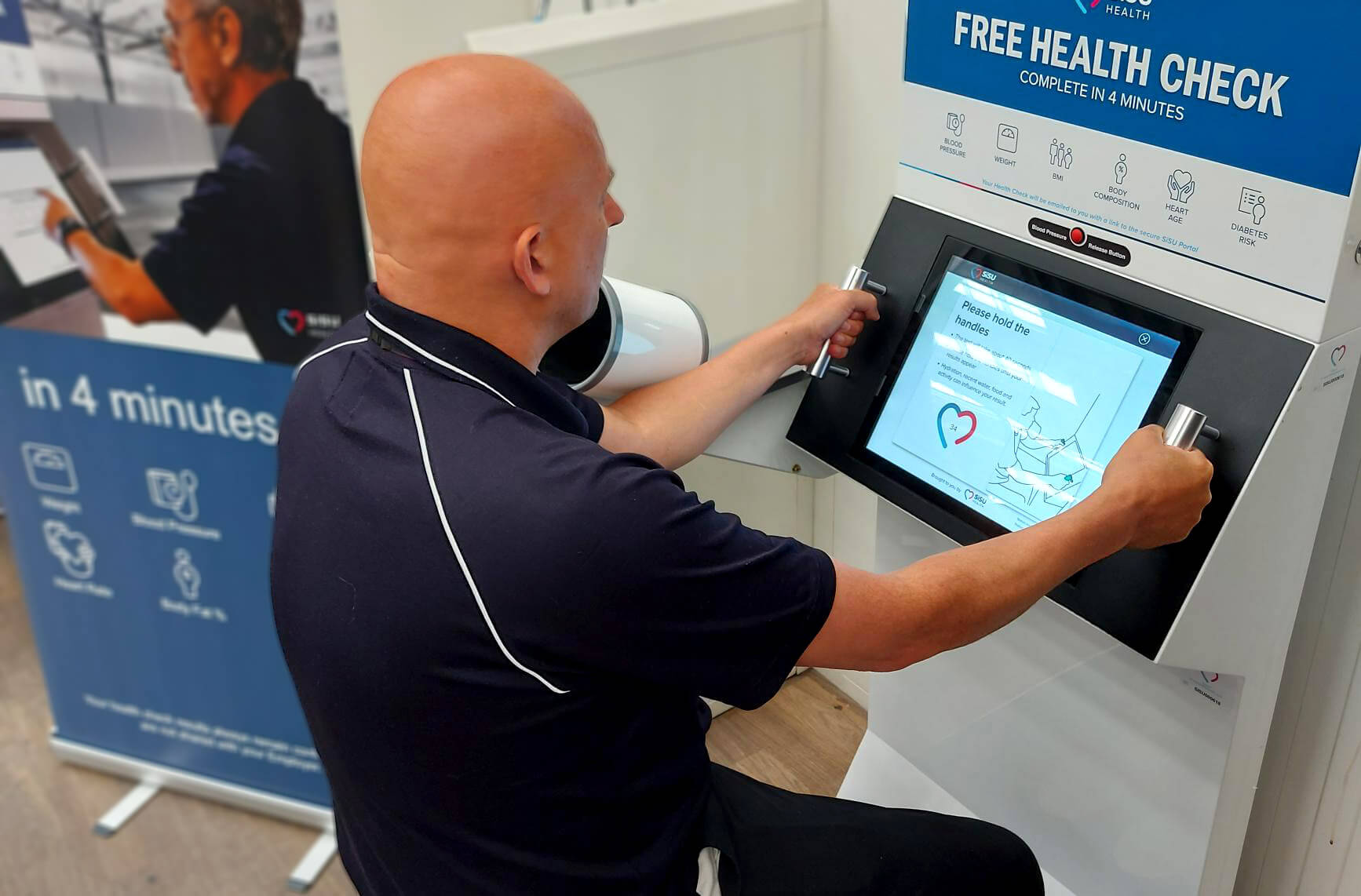
The three SISU Minis bring the health check to people instead. The council typically loans each station to a workplace or community organisation for around two weeks, adapting the placement to suit expected footfall.
Funding from East Suffolk Council’s Community Partnership Board and Community Infrastructure Levy supports the programme’s ambition to make health checks available to as many residents as possible across the district.
I was delighted to champion the SISU Health machines in East Suffolk as they fit well with our ambitions as a Marmot Place around tackling a wide range of health inequalities and the importance of prevention. As Cabinet Member for Health and Wellbeing, I am committed to maximising the opportunities for people to understand and improve their health and wellbeing.
Jan Candy, Cabinet Member for Health and Wellbeing, East Suffolk Council
Alongside widening access to trusted health checks, these early placements are showing the council who it is reaching, where different delivery formats could work best and how the wider programme should develop.
Taking health checks into shift-based and manual workplaces
East Suffolk Council is focusing the initial phase on routine and manual occupations, male-dominated industries and workforces with unsociable shift patterns – settings where accessing primary care during standard opening hours is more difficult.
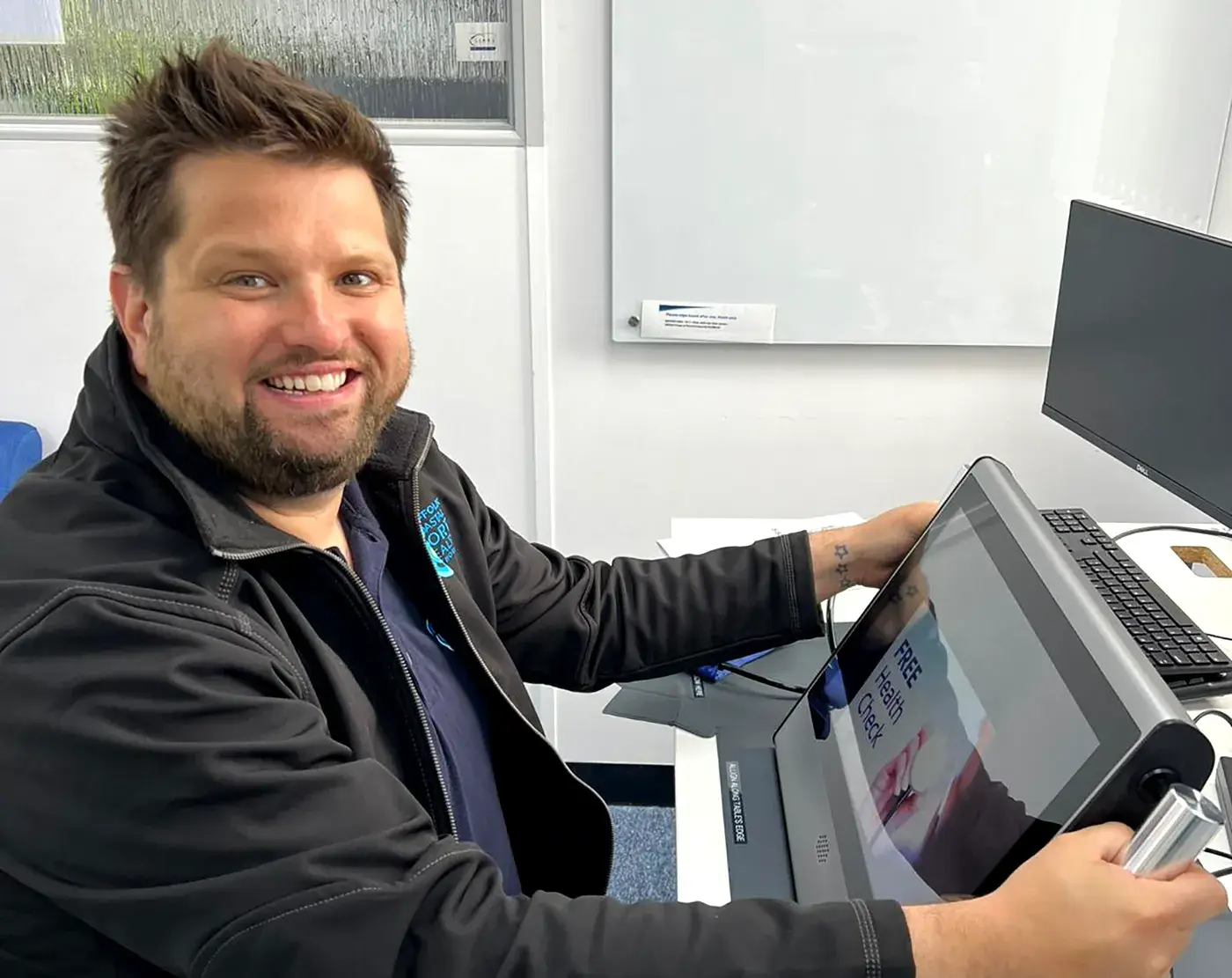
Network Rail track workers in Lowestoft and port health teams in Felixstowe are among the first groups to use the stations. Engineering businesses are now beginning to participate, while the council is building links with industrial estates and business centres and exploring how the Mini could support health and safety activity at Sizewell C.
Undertaking an assessment of your health can often feel quite scary or confronting for some people. Locating the machines in workplaces helps to break down those barriers to engagement and normalises the idea of checking your health regularly.
Amy Marr, Health, Wellbeing and Leisure Projects Officer, East Suffolk Council
The council combines local population health management and deprivation data with its knowledge of local employers when choosing placements. This helps focus activity on people and places experiencing greater health inequalities.
Two-week workplace loans depend on employer trust
East Suffolk Council is working primarily with HR managers, who often provide the internal support needed to introduce the stations and encourage participation.
The biggest takeaway is that relationships take a long time to build. You need time to engage with the business, understand what drives it and link that with the benefits of using the health check station.
Amy Marr
For businesses, the value is not limited to offering a convenient health check:
There are hidden costs for businesses around lost output and employees struggling to manage their health conditions. We want to help employers identify potential risks earlier, support staff wellbeing and use the insight to inform their health and wellbeing strategies.
Amy Marr
The council team manages delivery, collection and the initial handover, so organisations do not need clinical expertise or significant internal capacity to take part. Participating organisations have consistently highlighted how quick and simple the process is.
The short-loan model lets the council move each Mini between organisations and respond to new demand. Interest is beginning to spread locally as businesses hear that another employer on the same industrial estate has used a station and ask to take part themselves.
Half of participants had not checked their blood pressure in a year
Early data from 9 April to 19 August 2026 shows why bringing health checks into these settings matters.
Among the early findings:
- 50.3% had not had a blood pressure check during the previous 12 months
- 23.4% recorded high blood pressure
- 64.8% were overweight or obese
- 44.3% of participants recorded at least one of three health risks: high blood pressure, obesity or smoking
- More than one in five of those with at least one risk factor recorded multiple risks
Men were more likely than women to record high-normal or above blood pressure (65% compared with 50%) and high body fat (68% compared with 51%).
One of the positive things is that the stations are being used across all ages. They are accessible to young and old, which is great because we want to embed increased awareness of key health factors and risks across generations.
The Minis are very quick, mobile and flexible. The clinically validated measures also provide reassurance that the checks being completed depict an accurate picture of an individual’s health.
Amy Marr
These findings are starting to give East Suffolk Council a picture of who the programme is reaching and where more targeted prevention activity may be useful.
Unexpected results are connecting East Suffolk participants with support
So far, 25.2% of health checks have prompted participants to contact their GP because of high blood pressure or high BMI.
People who identify as smokers can opt into a direct referral to Feel Good Suffolk, the local healthy lifestyle service. The stations also provide broader signposting when a result indicates higher risk, while hosts receive information about local services supporting physical and mental wellbeing.
For one participant at a disability advice service in Lowestoft, the check showed that her BMI and heart age were higher than she expected.
She has increased her activity levels and bought a walking pad to use while she is working in the office. She is more mindful of her eating patterns and is now encouraging other people to check their results. It has had that ripple effect.
Amy Marr
Among 56 people who returned for another check, the early data records a 60% decrease in smoking. This remains an early finding, but it suggests some participants are using their results as a prompt to monitor their health and change their behaviours.
Early results from the programme show exactly why our commitment to making preventative health support more accessible across East Suffolk is so important. By taking health checks directly into workplaces and community settings, we are helping people overcome barriers such as shift work and time constraints, while identifying potential health risks that might otherwise go unnoticed.
Having used the SISU machine myself, I know how valuable it can be. When I needed an urgent health check for a repeat prescription and couldn’t get a GP appointment, it gave me quick access to the information I needed.
Cllr Caroline Topping, Leader of East Suffolk Council
Mobile learning is shaping five fixed East Suffolk stations
East Suffolk Council is close to installing five fixed SISU Health Stations across the district as the next phase of the programme (there is already a fixed SISU machine in Lowestoft Library funded by Suffolk County Council which will continue as part of this programme). These will extend the offer beyond short-term mobile placements and give residents consistent locations where they can check and track their health.
The data coming from this project will inform future health and wellbeing projects, as well as future ways of working. It is helping us understand who we need to speak to, which locations might work better and where a mobile machine may be more suitable than a fixed one.
Amy Marr
As the programme develops, the council plans to analyse deprivation, overlapping health risks and differences between locations in more detail. This deeper analysis could highlight where targeted drop-in sessions are needed and inform wider health and wellbeing activity across the district, including through the Marmot Place programme.
Bring earlier risk detection into everyday working life
East Suffolk Council’s early results show that taking preventative health checks into workplaces can reveal risks that might otherwise remain unchecked. Combining mobile and fixed provision can help public health teams reach new groups and connect more people with timely support.
As it has tested and adapted its approach, the council has also valued the responsive support provided by the SISU Health team.
The SISU Health team has been very proactive. Whenever there has been an issue, they have been quick to solve it, and they are very open to feedback. They are always looking at how they can improve the user journey and our experience as a local authority.
Amy Marr
If you are exploring how to make prevention more accessible across your population, talk to our team about creating a health check model shaped around your communities and local priorities.
Bring preventative health checks into local workplaces
Work with us to reach shift-based and manual workers in your community, uncover hidden health risks and provide earlier support.