
Most organisations track absence, turnover and engagement – but few measure the health risks that quietly shape performance every day. If you want to improve productivity, reduce long-term costs and make prevention part of your strategy, these are the five workforce health metrics that matter most.
Why proactive health measurement is becoming essential
The biggest drivers of lost productivity in the UK today aren’t engagement issues or operational bottlenecks, they’re health related. MSK problems, stress, hypertension, metabolic risk and lifestyle factors influence energy, resilience and day-to-day performance across every sector.
Most organisations, however, only track what happens after health issues have already affected performance.
The limitations of only measuring outcomes
Typical workforce indicators – sickness absence, benefits usage, engagement scores – are useful, but they’re retrospective. They capture the result of a health issue, not the early signs.
By the time these numbers rise, the productivity loss is already embedded. This makes it difficult for employers to answer crucial questions:
- What’s driving dips in energy and concentration?
- Which teams are showing early signs of stress or metabolic risk?
- Where should we focus wellbeing budgets to get the biggest return?
Why leading indicators matter
Health metrics provide a different, more forward-looking view. They surface underlying risks much earlier – often months or even years before they translate into absence or long-term conditions.
When employers can see these trends at population level, they’re able to:
- Plan interventions before problems escalate
- Target support where it will have the biggest impact
- Build a stronger business case for prevention
- Understand not just how people are performing, but why
As chronic conditions grow and healthcare services come under pressure, the organisations making real progress are those treating prevention as a strategic capability rather than a wellbeing extra.
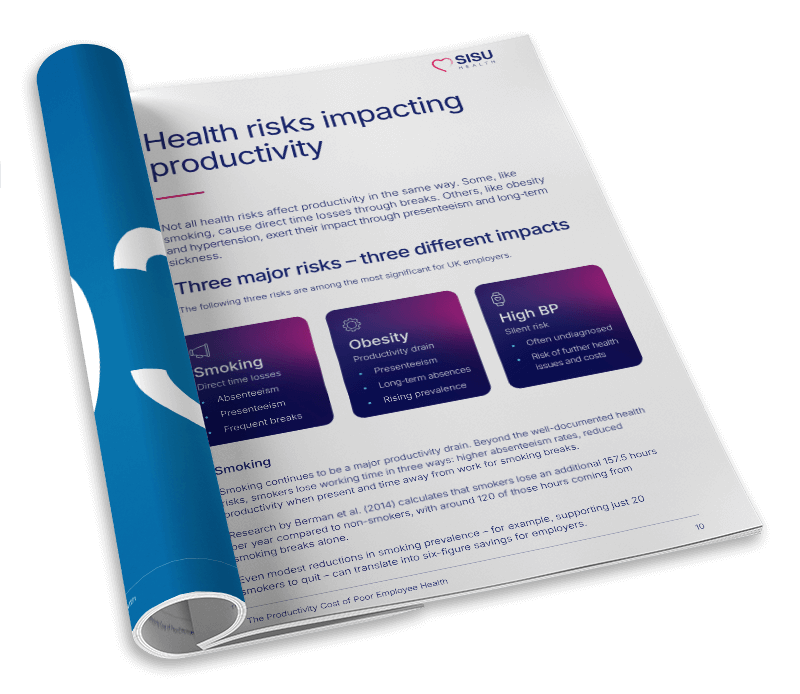
Discover your hidden productivity costs
Learn how unseen health risks impact your bottom line – and how to build a strong business case for early intervention.
What health indicators should employers be tracking?
These indicators are clinically meaningful, simple to assess and directly linked to performance. Captured at population level, they give employers a clear, objective understanding of their workforce’s health.
1. Blood pressure – a major risk you can’t usually see
High blood pressure affects millions of UK adults, often without symptoms. Many only discover it during a routine health check, which means organisations may be unaware of a significant underlying risk in their workforce.
Why it matters
Hypertension contributes to slower cognitive processing, fatigue, headaches and long-term cardiovascular complications. It quietly undermines performance long before it becomes a medical emergency.
SISU Health’s 2023-25 workforce dataset shows that 13.1% of screened employees had high blood pressure, meaning more than one in ten workers may be affected without knowing it.
What employers can track
- Prevalence of elevated readings
- Referral or follow-up rates
- Changes in risk over time
Strategic impact
Even modest improvements in blood pressure readings can reduce future sickness absence and improve sustained performance.
2. BMI and body fat percentage – practical indicators of metabolic health
BMI on its own has limitations, but when paired with body fat percentage it becomes a far more useful indicator of metabolic health. Together, they provide a clearer picture of the balance between lean mass and fat mass, as well as the potential risks linked to cardiovascular disease, diabetes, inflammation and low energy.
Why it matters
Metabolic health influences stamina, sleep quality, MSK strain and cognitive performance. Employees with rising metabolic risk often experience fluctuating energy levels and reduced resilience long before they reach clinical thresholds.
SISU Health’s workforce data from 2023-25 shows that 65.6% of employees had a BMI ≥25 and 28.5% were living with obesity. This mirrors national trends and highlights how widespread metabolic risk is within working-age populations.
What employers can track
- The proportion of employees in moderate or high metabolic risk categories
- Patterns across teams, departments or locations
- Changes after targeted wellbeing or lifestyle interventions
Strategic impact
Tracking BMI alongside body fat percentage helps employers identify early metabolic trends and intervene sooner. Over time, reducing metabolic risk across even a portion of the workforce delivers noticeable gains – higher energy, fewer MSK issues and a smaller pipeline of future long-term conditions.
3. Stress and mental wellbeing – the UK’s biggest productivity drain
Stress and poor mental wellbeing remain the leading cause of lost productivity, but it often increases gradually and goes unnoticed until absence rises or burnout occurs.
Why it matters
Stress diminishes concentration, decision-making, motivation and resilience. These impacts appear much earlier than recorded sickness absence.
What employers can track
- Stress and wellbeing scores across teams
- Seasonal or operational patterns
- Improvements after workload or support changes
Strategic impact
Proactive measurement allows employers to address issues before they escalate, improving both performance and morale.
4. Physical activity levels – a strong predictor of MSK issues and fatigue
Physical inactivity underpins many common health risks, including MSK pain, cardiovascular issues and low mood.
Why it matters
Employees who fall short of basic activity guidelines are more likely to experience discomfort, reduced stamina and energy dips that affect output.
What employers can track
- Self-reported activity levels
- Engagement with activity programmes
- Year-on-year shifts
Strategic impact
Increasing activity even slightly can reduce MSK-related presenteeism – one of the most expensive hidden costs across UK employers.
5. Smoking status – still relevant for performance and long-term risk
Although smoking rates have fallen, it remains a notable driver of respiratory issues, energy variability and chronic disease risk.
Why it matters
Smoking affects lung capacity, stamina and recovery, and can contribute to irregular work patterns due to additional breaks.
SISU Health’s data shows that 13.1% of employees smoke, which is slightly higher than the national adult average of 11.9%. For many organisations, this means smoking remains a material and sometimes underestimated productivity risk.
What employers can track
- Smoking prevalence
- Engagement with cessation support
- Quit rates
Strategic impact
Supporting employees to quit benefits long-term health and improves day-to-day consistency.
Collecting and using workforce health data responsibly
Health metrics only make a difference when they’re collected in a way people trust and feel comfortable engaging with. They also need to give employers a clear, reliable picture of population-level trends. That’s where SISU Health comes in.
How it works
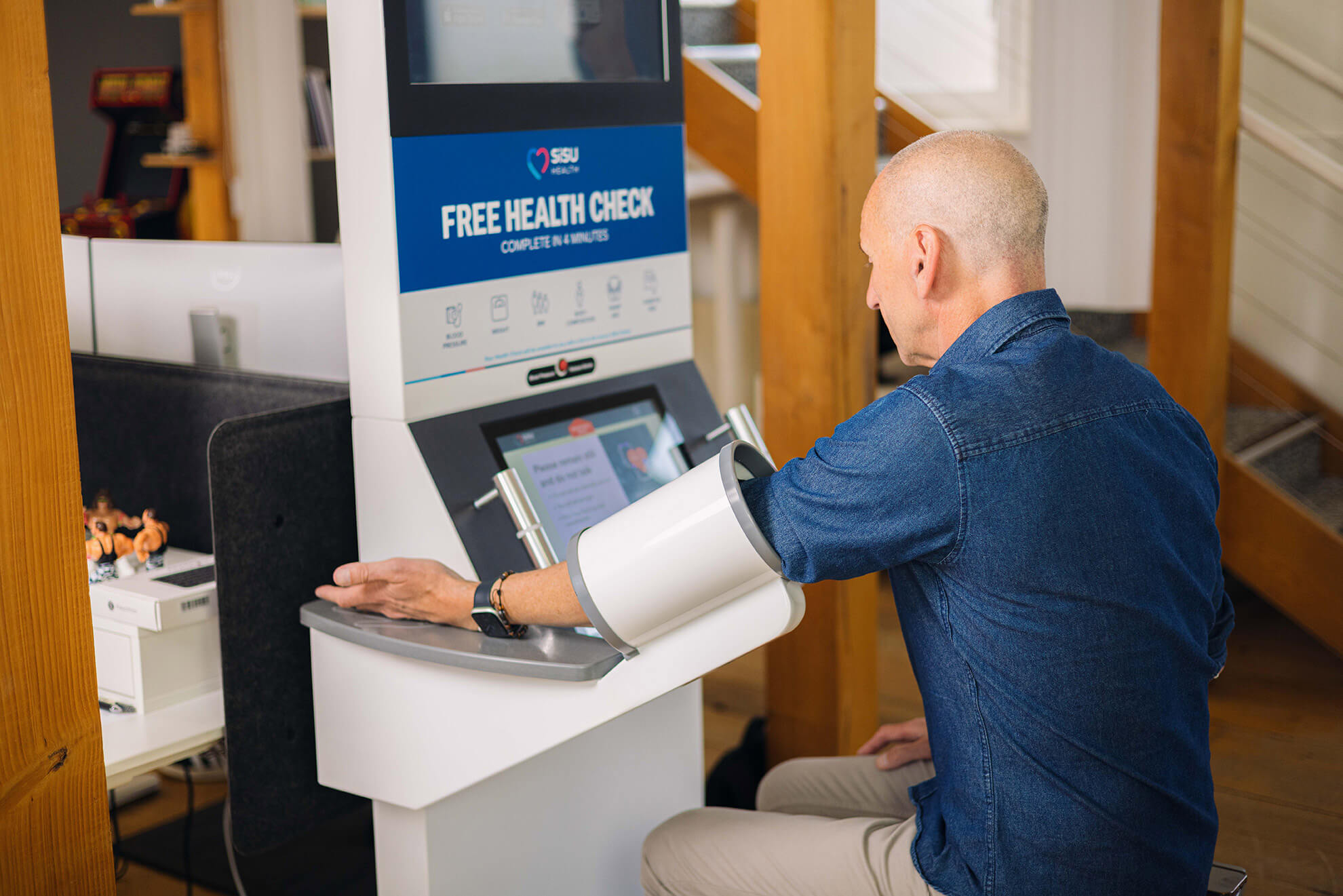
SISU Health provides self-service, medical-grade health checks that employees can complete privately in just a few minutes. There’s no need for appointments or clinical staff – the experience is simple, accessible and designed to work for people across different roles, shifts and confidence levels.
Once someone completes a check, they can view their results through the SISU Health app or online portal. This gives individuals ongoing access to their health information, with tools and guidance that help them understand their results and take practical steps over time. It turns a single health check into a longer-term point of support.
For organisations, these individual check-ins are brought together into anonymised, aggregated insights via secure dashboards. This allows leaders to see patterns in blood pressure, metabolic risk, stress indicators, activity levels and other measures, all without identifying any individual employee.
Ethical considerations
It’s important that workforce health data is used ethically. The insights should never be used to judge individuals or link health information to performance. Instead, they’re there to help organisations understand where support is needed, shape healthier working environments and invest in prevention more confidently.
By combining accurate measurement, responsible reporting and ongoing personal support through the app and portal, SISU Health gives employers a clear, real-time view of workforce health – one that encourages positive change rather than scrutiny.
From data to decisions: Putting prevention into practice
Once organisations have visibility of their workforce health, the question becomes: what next?
SISU Health can continue to offer value here. The data collected highlights where risk is concentrated, which groups may need tailored support and how health trends shift over time. It helps organisations prioritise investment – whether that’s weight management support, stress interventions, targeted campaigns or broader prevention initiatives.
As employees continue to check in, the data builds. Leaders can see whether interventions are working, where challenges persist, and how improvements correlate with operational performance. Suddenly, prevention isn’t a “nice to have” – it’s measurable.
In practice, this gives HR and wellbeing teams something many currently lack:
- A clear baseline
- Evidence of impact
- A way to justify budget
- A repeatable cycle of measure → act → re-measure
SISU Health’s role is to give organisations the tools, data and visibility to make prevention part of everyday working life – and to demonstrate its value in terms that matter to the business.
Turn health insights into action
Understand where risks are concentrated, prioritise interventions and measure real impact. Our team can show you how SISU Health makes prevention measurable.

Ready to deliver visible, measurable workforce wellbeing?
Discover how SISU Health helps employers deliver healthier, more productive workforces.