
The real value of workforce health data lies in how it is used. Drawing on findings from our new report, The State of Workforce Health in 2025, this article explores what the evidence means for HR leaders and how insight can be translated into practical, prevention-led workforce health strategies.
Workforce health is changing
Workforce health is entering a new phase. Health risks are emerging earlier, affecting working-age populations in ways that traditional healthcare pathways are not designed to detect or address. For HR leaders, this shift has direct implications for workforce strategy, benefits design and long-term productivity.
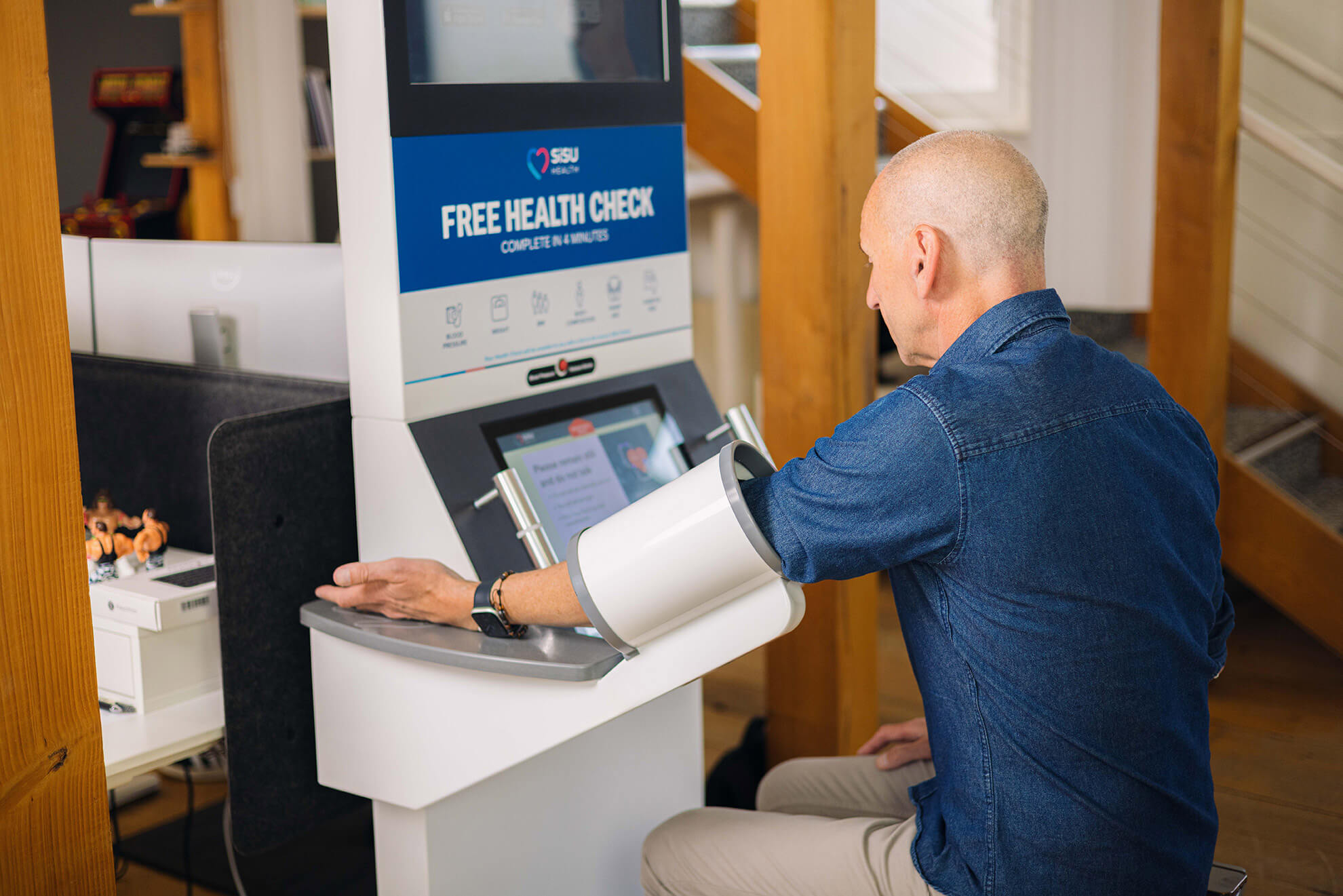
Drawing on real-world workplace health data collected through SISU Health Station deployments across the UK, The State of Workforce Health in 2025, highlights where health risk is showing up today, why existing approaches are falling short, and how employers can translate insight into practical action.
Health risk is emerging earlier – and HR strategies need to reflect it
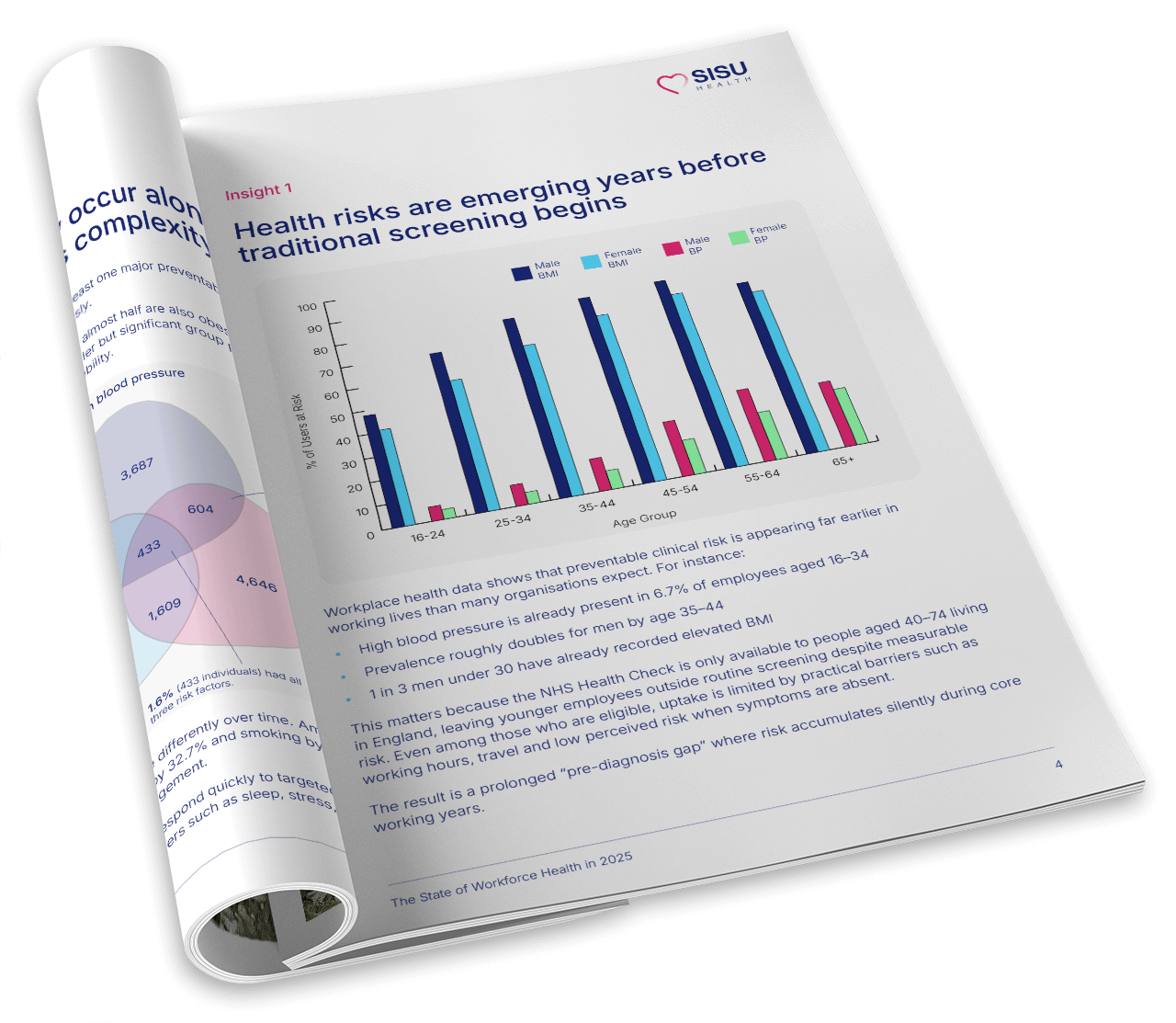
One of the clearest signals from workforce health data is that preventable risk is appearing well before people enter routine screening or clinical pathways.
Across many organisations, employees under 40 are already presenting with elevated blood pressure, weight-related risk or nicotine use. These risks often develop silently during core working years, with no symptoms and no trigger for GP engagement.
What this means for HR leaders: Age-based assumptions about who is “at risk” can leave significant gaps. Workforce health strategies that focus primarily on older employees may miss the opportunity for earlier, simpler intervention that protects long-term health and employability.
Access, not motivation, is the real barrier to prevention
Low engagement in preventative health is often framed as a motivation problem. Workforce data suggests otherwise.
When health checks and support are accessible within the working day, participation is consistently higher. When access depends on taking time off work, travelling to appointments or navigating overstretched services, engagement drops – particularly among frontline, shift-based and lower-paid workers.
What this means for HR leaders: Improving access is often more effective than launching new wellbeing campaigns. Embedding prevention into everyday working life can help reduce inequalities in uptake and ensure health initiatives reach the people who need them most.
Health risks rarely appear in isolation
Workforce health data shows that employees presenting with one risk factor are often experiencing others alongside it. Cardiometabolic risk, stress, sleep disruption and lifestyle factors frequently cluster together.
Single-issue interventions may struggle to create lasting impact if wider drivers of health are left unaddressed.
What this means for HR leaders: Disconnected wellbeing initiatives can limit return on investment. More integrated approaches that reflect how health actually shows up in working life are better suited to supporting sustained behaviour change.
One workforce, very different health realities
Workforce health is far from uniform. Risk levels vary widely by sector, role and demographic group.
Certain industries consistently experience higher levels of cardiometabolic risk, while men and women often show different patterns of health pressure. These differences are shaped by job demands, working environments and shift patterns – not just age or personal choice.
What this means for HR leaders: Generic wellbeing programmes may struggle to meet diverse needs. Using workforce health data to understand where risk is concentrated can support more targeted, relevant interventions.
Prevention works best when it fits working life
Perhaps the most encouraging insight from the data is that prevention can work when it is accessible and repeatable.
Where employees have regular opportunities to check in on their health and track progress over time, improvements do occur – particularly for risks that respond well to early action. Consistency matters more than one-off initiatives.
What this means for HR leaders: Prevention does not require replacing clinical care. It does require rethinking how health support is delivered, and how employees can engage with it over time.
From insight to action: the evolving role of employers
As pressure on UK clinical services continues and eligibility-based screening leaves gaps, employers are playing an increasingly important role in early prevention.
Workplace-based approaches can help close the gap between emerging risk and formal care, supporting healthier working lives while reducing long-term impact of preventable illness on absence, productivity and retention.
For HR leaders, understanding what workforce looks like today is the first step. Acting on that insight is what turns data into meaningful change.
Download the Full Workforce Health Report
Discover workforce health trends, emerging risks and practical insights to inform your wellbeing strategy.

Turn workforce wellbeing into measurable results
Learn how we help employers reduce hidden health costs, boost productivity and improve employee wellbeing.