
Routine and manual workers are often among those at greatest risk of cardiovascular disease, yet can be the hardest to reach through traditional health checks. Discover how Jaguar Land Rover (JLR) and Solihull Metropolitan Borough Council brought prevention into the workplace – and what other organisations can learn from the results.
Traditional preventative health services don’t always reach the people who could benefit most. Time pressures, shift patterns and barriers to accessing healthcare can make it difficult for working-age adults – particularly frontline and manual workers – to engage with routine cardiovascular health checks.
As part of the Department of Health and Social Care’s national workplace cardiovascular disease pilot, JLR partnered with Solihull Metropolitan Borough Council and local health partners to test whether bringing health checks directly into the workplace could improve access, identify hidden cardiovascular risk earlier and strengthen referral pathways.
This local evaluation (published in October 2025) goes beyond programme outcomes to examine what worked, the operational challenges encountered and the partnership learning that could help shape future workplace prevention programmes.
1,275 workplace health checks completed. One in nine participants were found to have a moderate or higher risk of developing cardiovascular disease, while more than one in three required onward referral to a GP.
Download the report to explore the evidence behind these findings, along with the operational insights and practical lessons that can help shape future workplace cardiovascular prevention programmes.
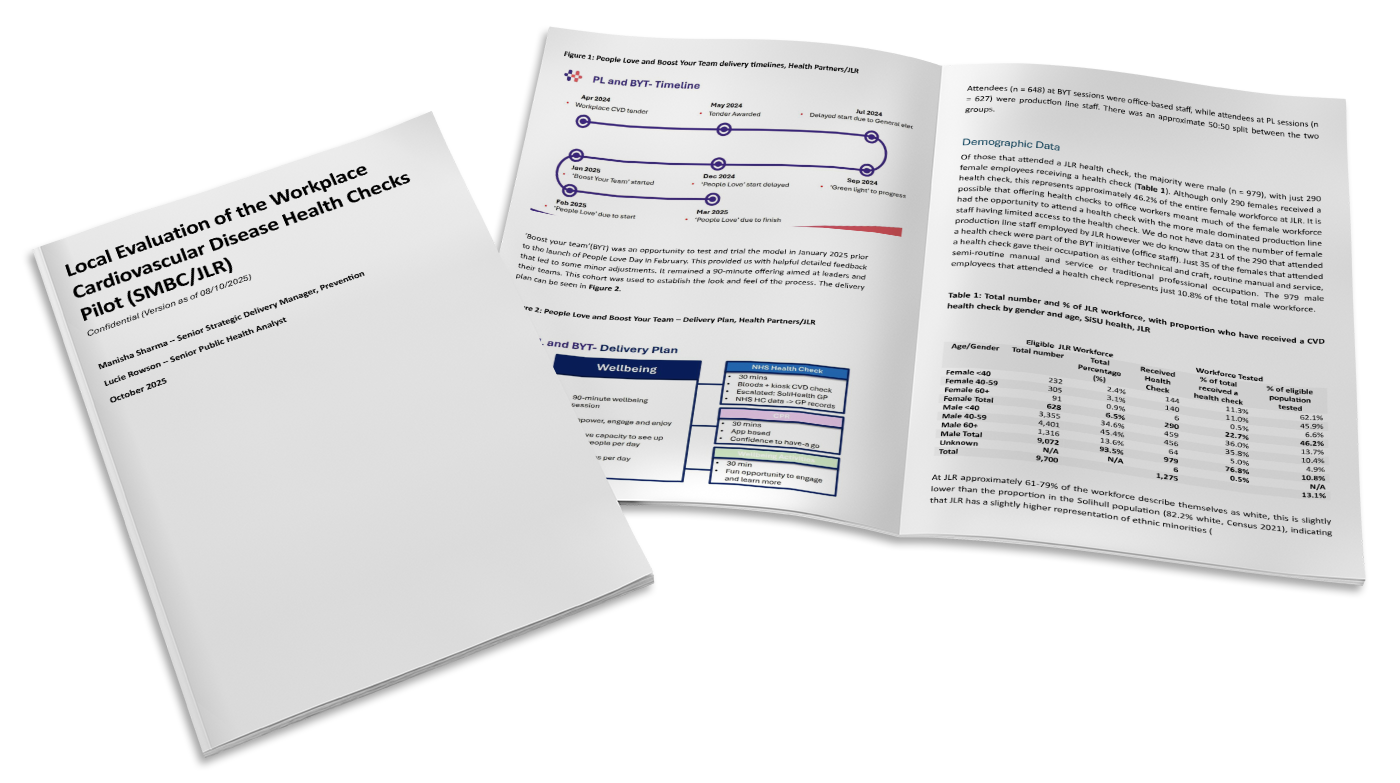
Evidence and practical lessons from a national workplace CVD pilot
Developed alongside one of England’s national workplace cardiovascular disease pilots, this evaluation combines programme data with practical implementation learning. Whether you’re planning a workplace prevention programme or looking to improve an existing one, it offers evidence and lessons that can help inform future delivery.
Download the report to discover:
- How workplace health checks helped engage employees less likely to access traditional preventative services
- What the programme revealed about hidden cardiovascular risk across a working-age population
- Practical lessons for reducing barriers to workplace prevention and improving participation
- How partnership working supported referral pathways, follow-up care and programme delivery
- The critical success factors for planning, delivering and evaluating workplace cardiovascular prevention programmes
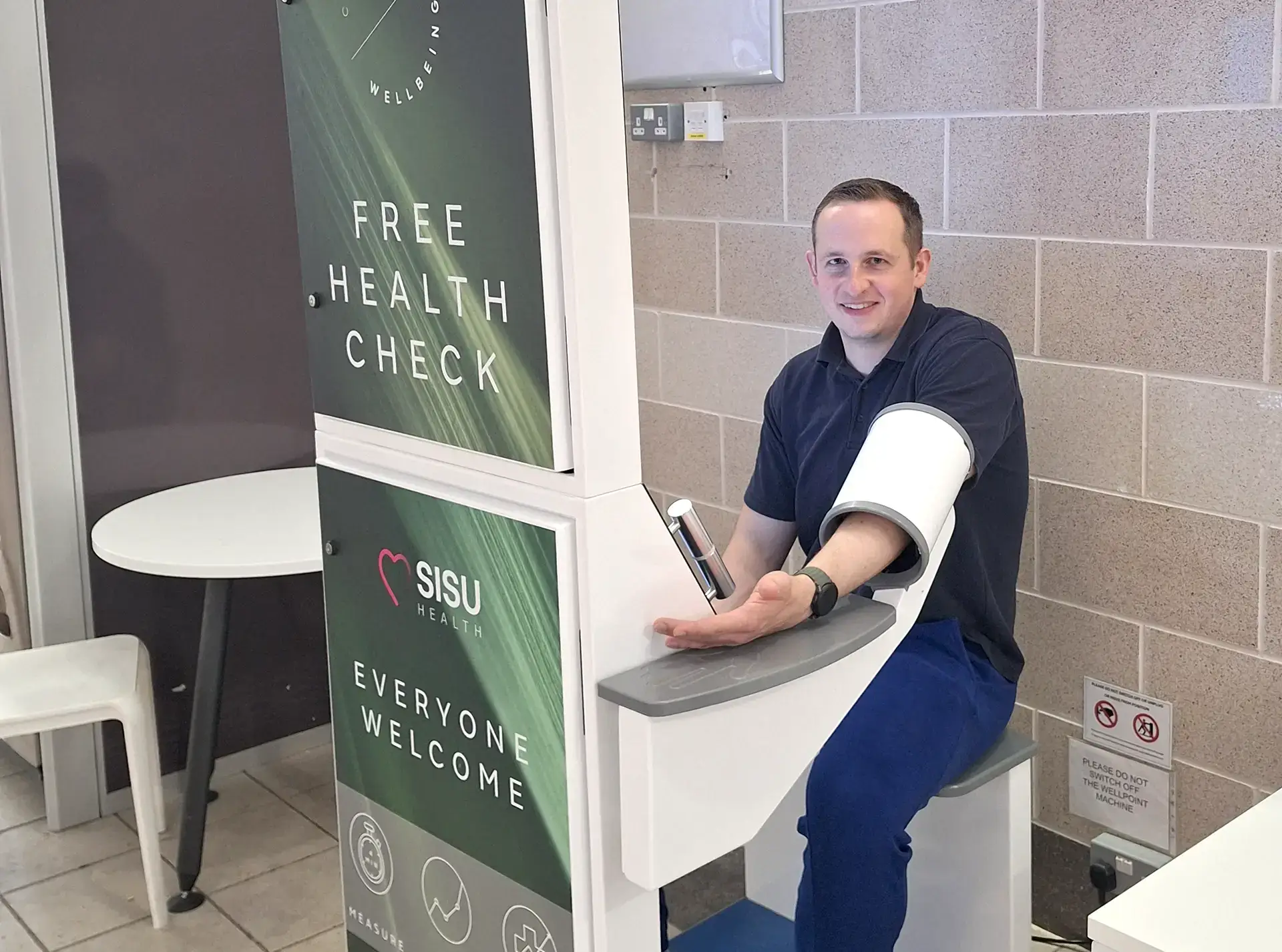
See how workplace prevention could work for your organisation or community
Talk to our team about delivering accessible workplace health checks that identify hidden cardiovascular risk and support your prevention objectives.