
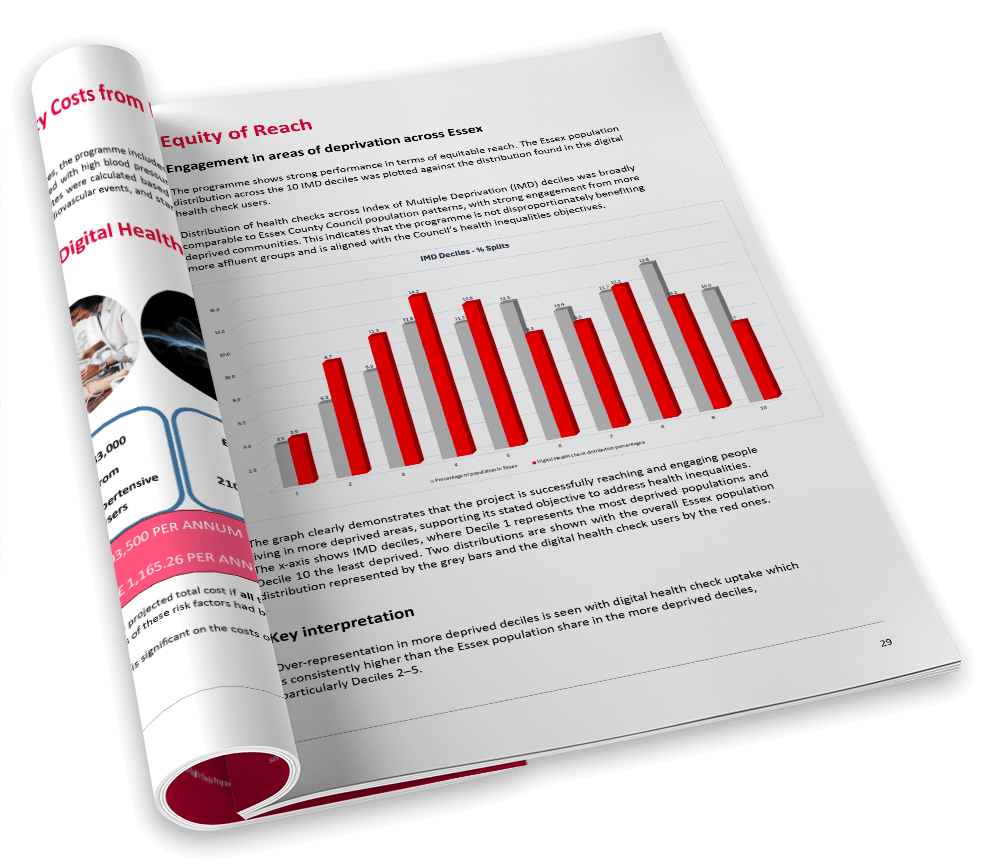
Routine and manual workers often experience poorer health outcomes yet remain among the least likely groups to engage with traditional preventative services. This evaluation reveals how Essex County Council used workplace-based health checks to improve access, identify hidden health risks and connect people to early support.
Traditional prevention services often struggle to engage routine and manual workers, despite these groups facing some of the highest levels of preventable ill health. Practical barriers such as working patterns make available services difficult to access.
To address this challenge, Essex County Council launched a workplace-based prevention programme using mobile health stations across businesses and community settings.
1,654 health checks delivered. 1,400+ people reached. Nearly 70% identified as overweight or obese.
Using real-world programme data, the evaluation report highlights what it takes to engage underserved populations, uncover hidden health risks and connect people to support early.
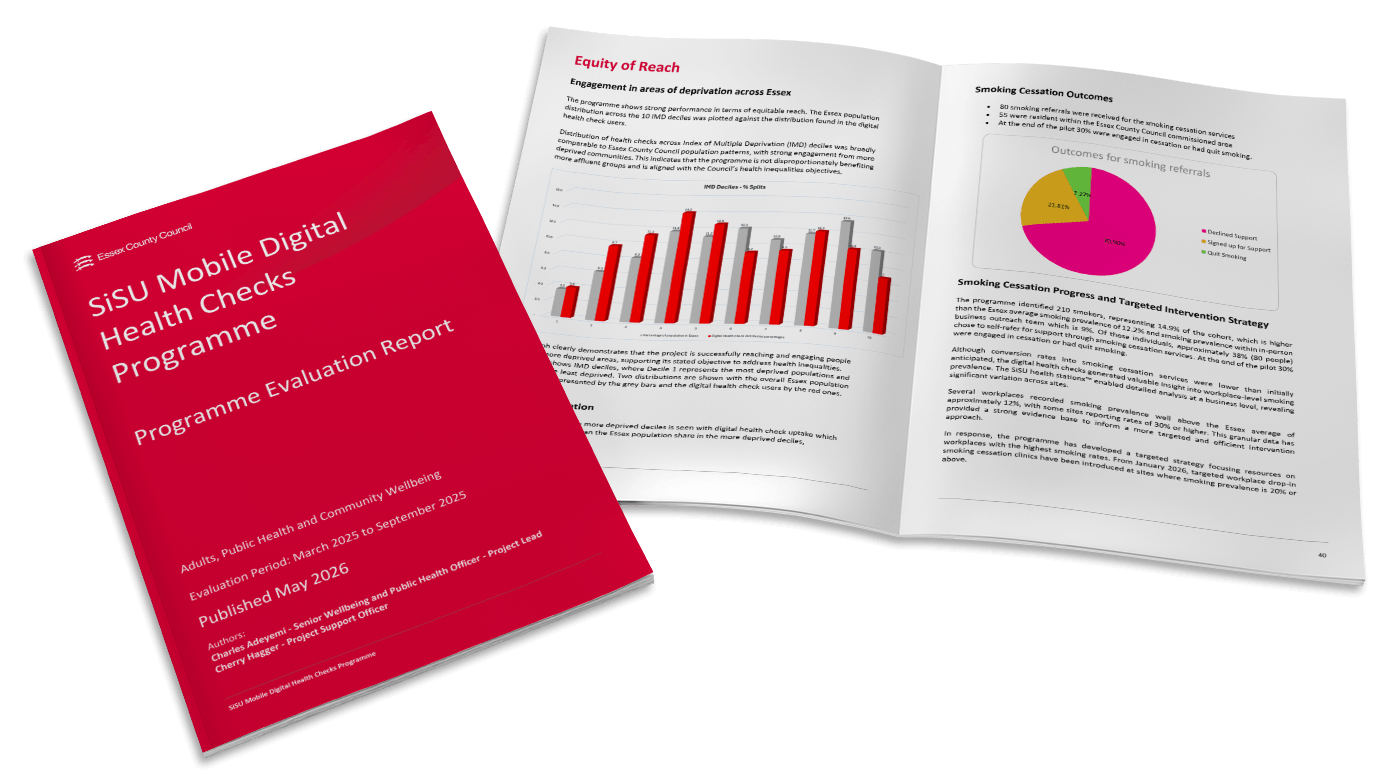
What Essex County Council’s programme reveals about reaching underserved populations
Discover how Essex County Council brought health checks directly into workplaces to uncover hidden cardiovascular and lifestyle risks that may otherwise have gone unnoticed.
Download the report to discover:
- How Essex engaged routine and manual workers through workplace-based prevention
- What hidden health risks were identified across participating populations
- How referral pathways connected people to smoking, weight and wellbeing support
- What the programme reveals about reducing access barriers to prevention
- Practical lessons for designing scalable, targeted public health interventions
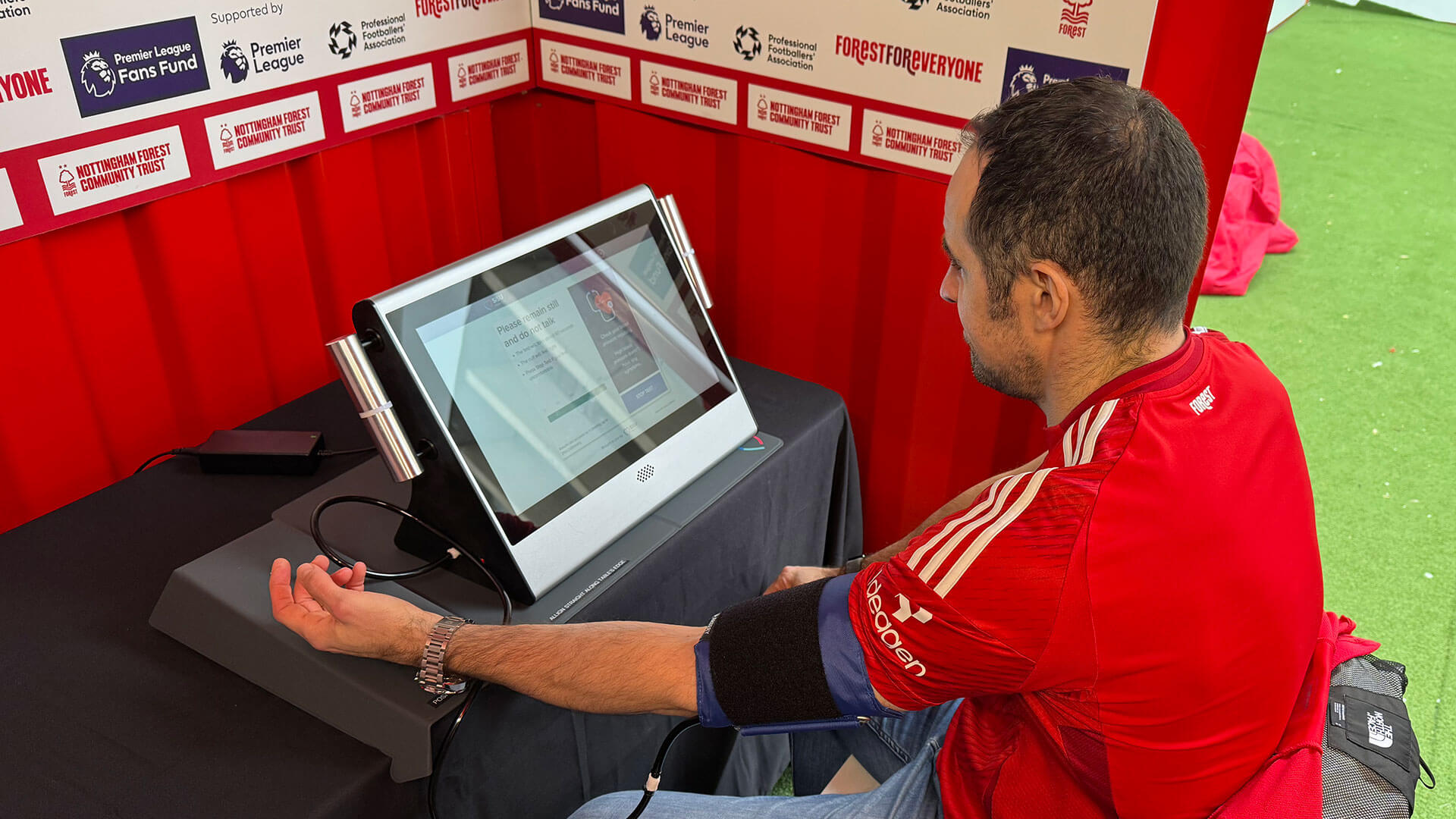
See how workplace prevention could work in your community
Talk to our team about delivering accessible health checks that reach underserved populations and support your public health objectives.