Workspace partnered with SISU Health to uncover hidden health risk across London’s SME workforce. With three-quarters of participants having missed routine checks, the programme surfaced early risk, prompting behaviour change and generated insights that now shapes Workspace’s wellbeing strategy.
The challenge – Helping time-pressed SME teams prioritise their health
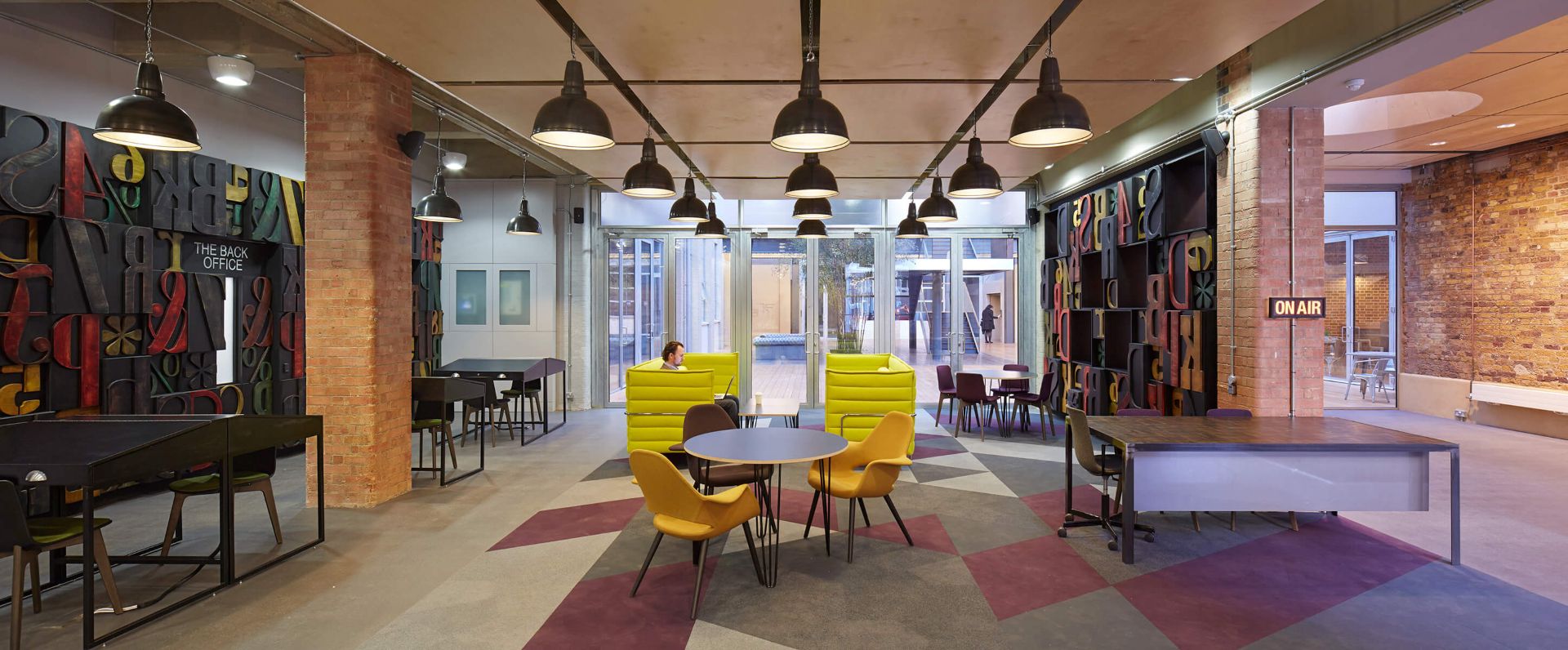
Workspace is home to more than 4000 SMEs across London – a diverse mix of creative studios, digital start-ups, professional service firms and fast-growing scale-ups. It’s a dynamic environment, but one where people often move at pace, work long hours and juggle competing pressures. Amid that intensity, making time for preventative health checks can be difficult.
Ahead of the programme, Workspace saw growing signs of strain within its community. Stress levels were rising, teams were operating leaner, and many employees lacked the time, structure or confidence to engage with routine health support. Even those who felt concerned about their wellbeing didn’t always know where to start – or couldn’t justify the time away from their desk.
SMEs are more stretched than ever – burnout, stress, productivity challenges. It’s a real issue.
Pete Evia-Rhodes, Customer Engagement Project Lead
This created a clear challenge: how do you reach a dispersed, time-poor workforce with preventative health support that feels relevant, approachable and worth the brief pause in their day?
Workspace wanted a solution that would fit naturally into everyday routines, reduce barriers to taking action and give people a simple, trusted way to understand their health. Prevention needed to feel easy, normalised and accessible to everyone who walked through its buildings.
The solution – Bringing prevention into the flow of the workday
Supported by Southwark Council through the national Workplace CVD Health Checks Pilot, Workspace introduced SISU Health’s integrated prevention platform across three buildings: Metal Box Factory, Cargo Works and The Print Rooms.
Although the pilot focused on cardiovascular indicators (blood pressure, BMI and smoking status), tenants benefited from health checks wider capabilities – including medical-grade assessments, instant results and digital behaviour-change tools that extend support far beyond the check itself.
Trusted assessments, delivered in minutes
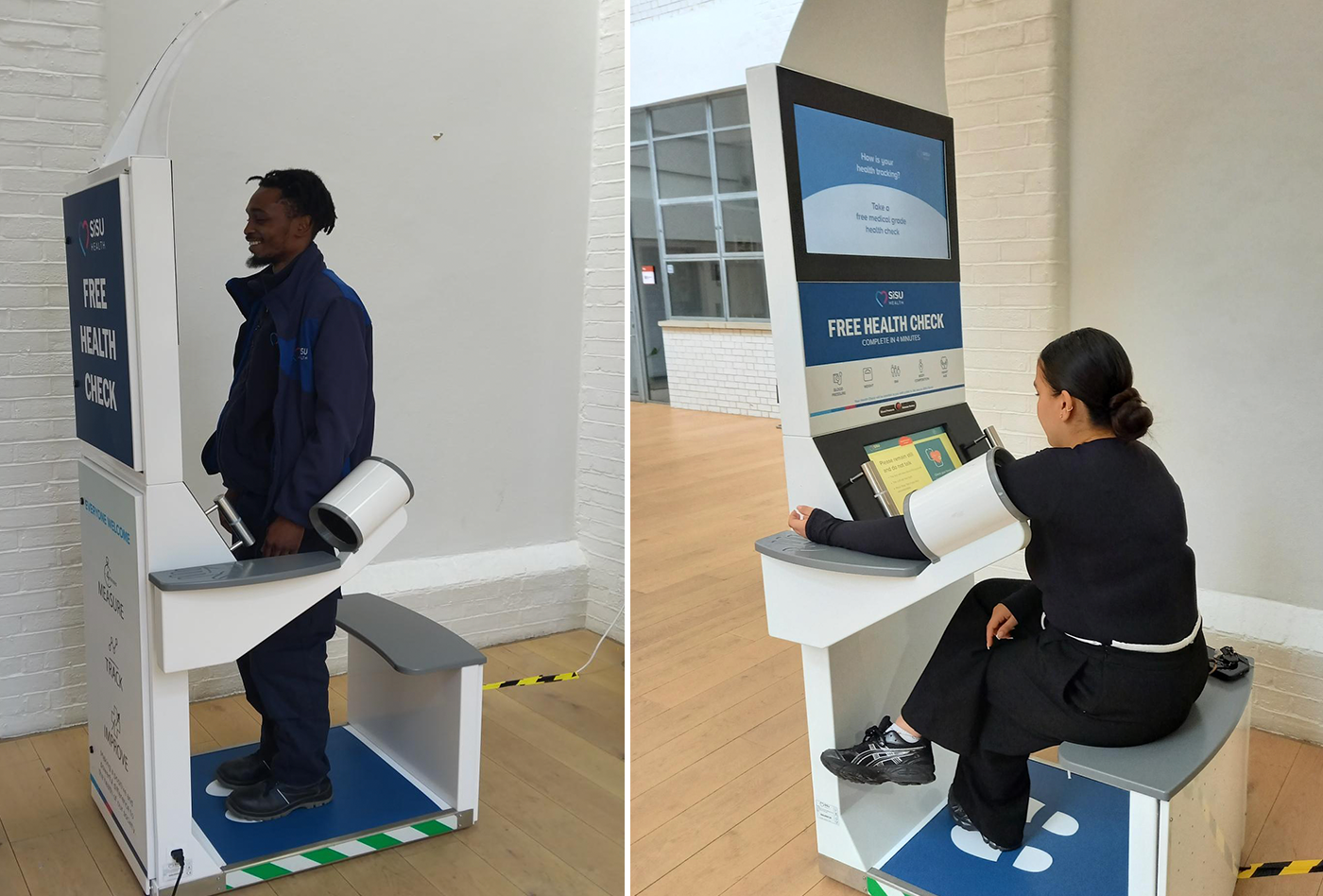
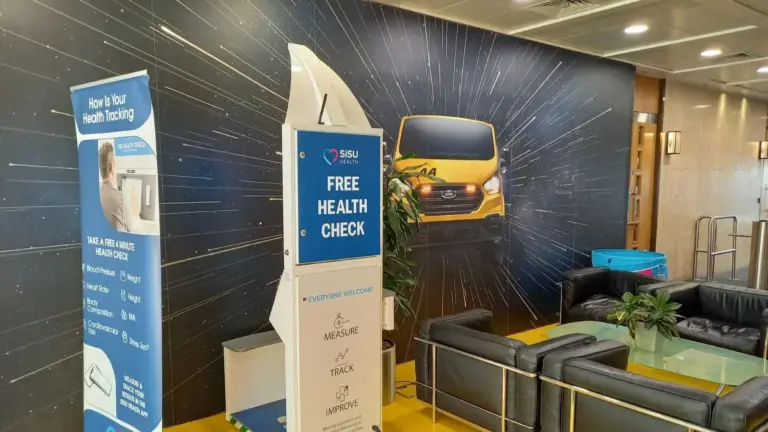
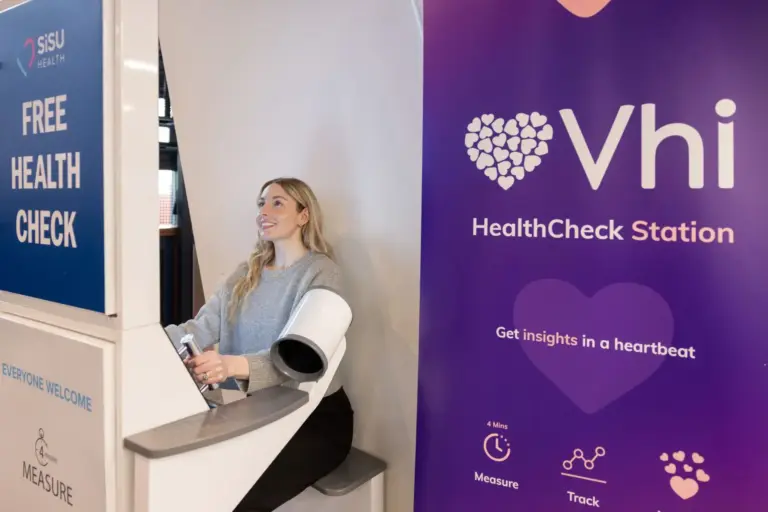
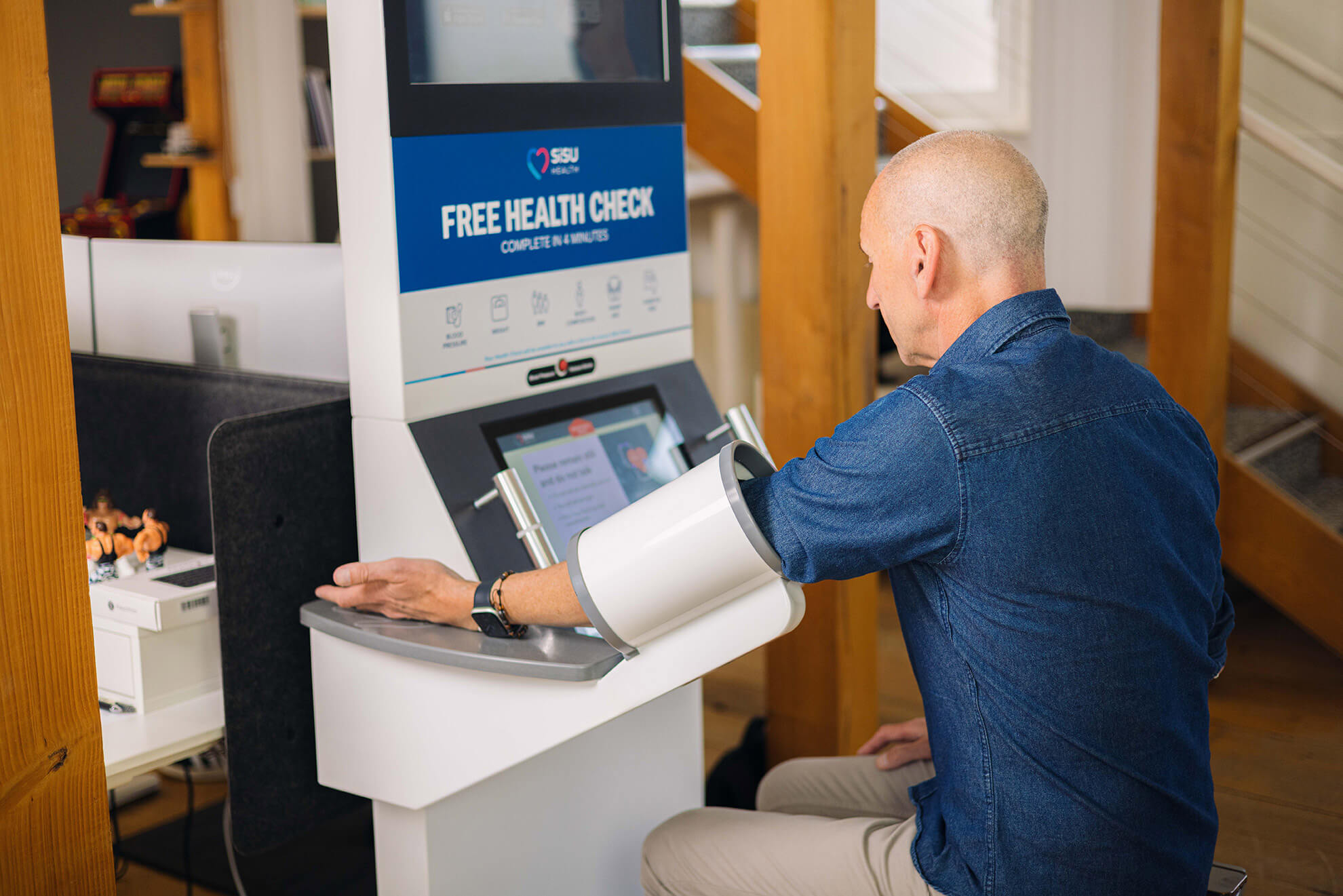
SISU Health’s self-service health stations gave people a discreet, clinically trusted way to check their health during the working day. Each assessment provided:
- Medical-grade readings
- Instant, easy-to-understand results
- Clear, personalised recommendations
- Access to SISU Health’s digital pathways for ongoing behaviour change
The combination of credibility, ease and immediacy was crucial. As Pete shared:
The device was quick, easy to use and medically trusted, which removed the time and trust barriers completely. In a world full of pop-up wellness gadgets, it was refreshing to offer something medically signed off and genuinely reliable.
Placement that encourages engagement
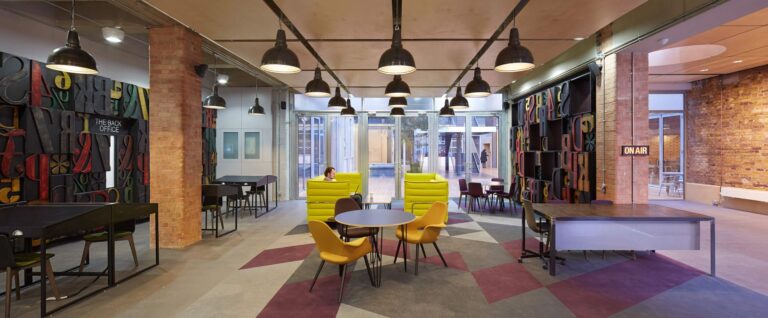
Each building offered a different environment to test engagement:
Metal Box Factory: A high-footfall, open location created natural curiosity and strong uptake.
The Print Rooms: A quieter, more private space showed how subtle shifts in placement affect participation.
Cargo Works: An older demographic helped explore how to support groups who may feel self-conscious about checking BP or weight.
These variations generated practical insight into how visibility, privacy and building culture shape engagement – learning that informs future workplace prevention programmes.
A broader prevention platform behind every check
While fulfilling the pilot’s CVD criteria, the wider SISU Health platform enabled more meaningful impact. Participants could access further guidance on movement, nutrition, sleep, stress and lifestyle habits via the SISU Health app and portal, turning a single check into the starting point for healthier routines. This aligned closely with Workspace’s broader ambition to support a thriving, resilient tenant community.
The results – Early detection, broad reach and real behaviour change
The deployment generated strong engagement across Workspace’s sites, delivering meaningful health insights for a workforce that is typically underserved by traditional preventative programmes.
- 75.8% had not had their blood pressure checked in over a year
- 31 GP alerts issued for elevated blood pressure
- 50.3% overweight or obese – despite a median age of just 30
- Engagement across the socioeconomic spectrum, with most falling in IMDs 2-6
- 8.5% repeat engagement, with improvements among returners
High demand for accessible health support
The results showed a strong appetite for accessible, clinically trusted health support. Three-quarters of participants had not checked their blood pressure in more than a year, highlighting a significant access gap that Workspace and SISU Health helped close immediately.
Early detection of hidden risk
Early detection was a major achievement. Thirty-one participants received GP alerts for elevated blood pressure – individuals who may not have known they were at risk without an onsite check. Identifying silent risks early is precisely what wokplace-based prevention aims to achieve.
Reaching a broad cross-section of workers
The demographic profile was striking. With a median age of 30, the programme reached a noticeably young workforce – younger than many comparable workplace health initiatives. Despite their age, many presented modifiable risk factors, including elevated BMI and high or raised blood pressure. This confirmed the value of engaging early-career workers long before risks typically escalate.
At the same time, discreet placements helped encourage older workers who can feel more hesitant about visible checks, highlighting how small environmental changes can widen reach.
Engagement spanned the full socioeconomic gradient, with participants drawn from every IMD decile and the largest proportion coming from deciles 2-6, reflecting Workspace’s diverse tenant base and demonstrating accessibility across different backgrounds.
Clear signs of behaviour change
Once people had the information, they wanted to take action. Some came back to check their progress, and you could see the changes they’d started making. It showed a real appetite to take control of their health, not just to check it.
Importantly, behaviour change was already visible. 8.5% returned for a follow-up check, with many showing improvements. These were self-motivated returns – evidence that people weren’t just curious but committed to improvement.
Strategic value – Insight that drives long-term impact
For Workspace, the programme delivered more than individual assessments. It produced a data-rich picture of tenants’ heath needs, helping shape future wellbeing plans and reinforcing the organisation’s commitment to supporting physical, mental and lifestyle wellbeing. The insights strengthen Workspace’s value proposition to businesses that increasingly expect modern workplaces to support healthier working lives.
For Southwark Council and the national Workplace CVD Health Checks Pilot, the deployment demonstrated the feasibility – and impact – of embedding prevention in SME-dense environments. The initiative showed that simple, self-service health checks can reach diverse working-age groups, surface risk early and provide valuable population-level insight to support wider public health strategy.
Pete summed up the collective impact:
The pilot was so successful that customers and teams are already asking for it to return. It was incredibly easy to set up, and the look and feel of the station was fantastic.
But the biggest thing for me was the sense of purpose – together, we identified potentially dangerous conditions, the silent killers people often don’t notice. Being part of that feels hugely meaningful, and I’m really proud of what we achieved.
The success of the programme demonstrates a clear opportunity for other organisations: when health insights are accessible, behaviour change follows. Workspace proved that prevention can thrive in modern, fast-paced workplaces – and that the benefits are both immediate and lasting.
Bring prevention into your workplace
Supporting tenants’ health across a variety of sectors, across a fast-paced SME structure, requires a wellbeing strategy that is accessible, efficient and easy for the employees to engage with.
SISU Health helps organisations deliver scalable preventative health solutions that empower your teams with accessible, data-driven health insights that support long-term wellbeing.
Client Profile
Workspace
Workspace is a real estate investment trust based in London, providing office, industrial and workshop space to SMEs.
More employer success stories
Discover how employers are improving wellbeing engagement and health outcomes.




Ready to turn preventative insight into measurable health improvement?
See how SISU Health helps organisations uncover hidden risk, prompt early action and track change over time with on-site health checks.