
HR and wellbeing leaders are under increasing pressure to demonstrate the value of workplace wellbeing, which is often viewed as a one-off initiative. Workforce health data can help organisations quantify risk, identify opportunities and build a stronger case for investment by linking employee health to business performance.
Why wellbeing strategies often struggle to secure funding
Every HR and wellbeing leader knows that healthier employees perform better. But when it comes to board approval, belief isn’t enough – it needs to be backed by numbers.
At board level, wellbeing still too often sits under “people initiatives” rather than “business performance”. Senior leaders want to support their workforce, but they also need to see a measurable link between wellbeing and outcomes such as productivity, retention and financial performance.
To secure investment, HR and wellbeing leaders must position wellbeing as an enabler of growth, resilience and efficiency.
The hidden productivity cost of poor workforce health
According to the Institute for Public Policy Research (IPPR), poor health among the working-age population costs UK businesses an estimated £103 billion each year through lost productivity and economic impact.
Analysis from SISU Health’s workplace health check data (using productivity cost modelling based on smoking and high blood pressure prevalence) suggests that across a typical 1,500-person workforce, these risks can amount to more than £1.7 million in annual lost productivity.
For HR and wellbeing leaders, this data transforms wellbeing from an abstract people issue into a measurable business challenge.
Five ways to build a wellbeing business case that secures leadership support
1. Frame wellbeing as a strategic investment, not an expense
Boards fund what they can measure. When wellbeing is backed by data – not anecdotes – it earns its place in strategic planning.
Start by connecting wellbeing outcomes to the organisation’s priorities:
- Productivity and output: Reduced presenteeism and fatigue translate directly into higher performance.
- Retention and engagement: Healthier employees are more loyal, motivated and productive.
- Reputation and ESG: Demonstrating care for employee wellbeing strengthens employer brand and sustainability reporting.
Wellbeing isn’t just about supporting people – it’s about enabling them to perform at their best.
Organisations that use workforce health insights are better positioned to identify risks, target preventative action, and support both employee and organisational performance.
2. Use data to turn intuition into evidence
Leadership teams respond to clarity and credibility. The more precisely you can show the link between health and business outcomes, the stronger your case will be.
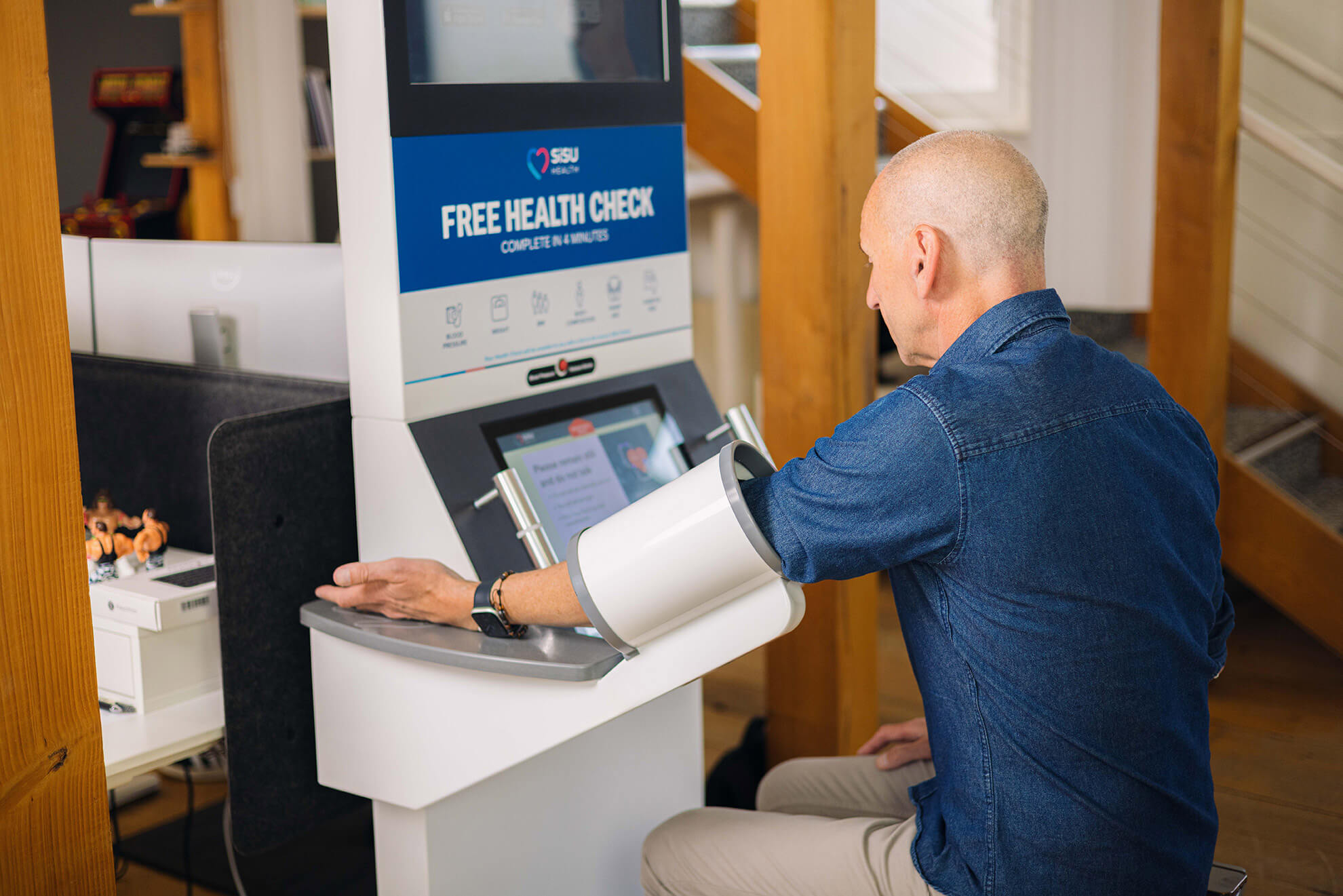
That starts with measurement. Effective workforce health programmes help organisations identify health risks, benchmark performance and track progress over time. Screening and benchmarking tools can provide that visibility, helping organisations identify risks and prioritise action.
Benchmarking transforms wellbeing from a “nice-to-have” into a performance metric. When you can show that your organisation’s high blood pressure rates are 20% above the industry average, for example, the argument for early intervention becomes impossible to ignore.
Workforce health data makes wellbeing decisions easier to defend – and easier to fund.
To move from good intentions to funded action, HR and wellbeing leaders need to present a case built on evidence, not emotion – one that links workforce health directly to productivity, performance and risk reduction.
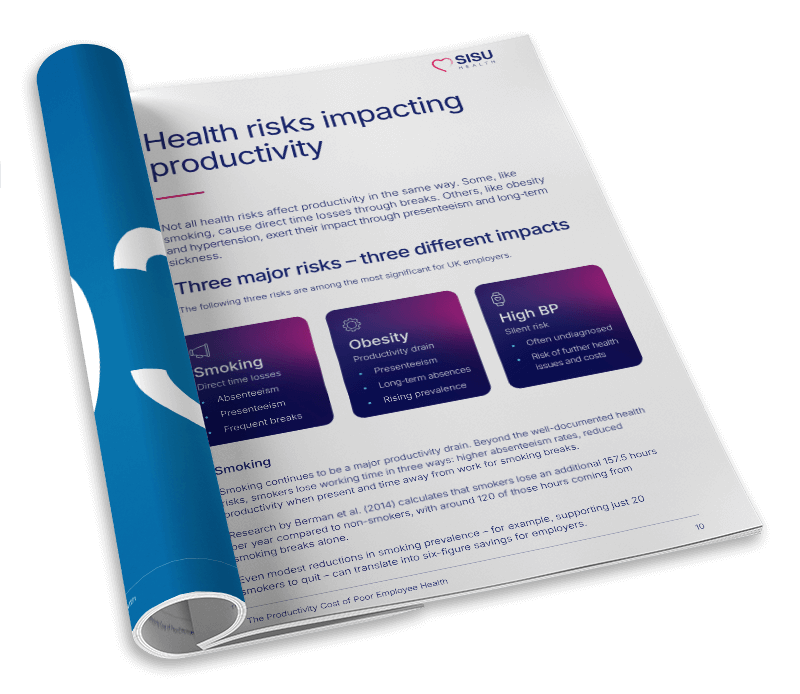
Discover how workforce health impacts productivity
Download The Productivity Cost of Poor Employee Health eBook to learn how data and prevention translate into measurable business value.
3. Speak the board’s language: ROI and risk
A business case for wellbeing should connect directly to financial outcomes. That means presenting not just what you’ll do, but what it will deliver.
Boards tend to look for three things:
- Return on investment: What financial gains will this deliver through productivity, engagement or reduced absence?
- Risk mitigation: How does prevention reduce future costs or disruption?
- Strategic alignment: How does this support our wider objectives around ESG, culture or performance?
Financial projections become more compelling when supported by real-world evidence. According to the Balfour Beatty VINCI case study, workplace health data helped identify key health risks, including high blood pressure and smoking. Using productivity modelling, these risks were estimated to be associated with approximately £2.35 million in annual productivity losses.
While these figures are modelled estimates, they provide valuable insight into the potential cost of inaction and highlight the role prevention could play in supporting workforce performance.
4. Build the case around people and performance
Boards invest in wellbeing when it’s clear that it benefits both people and the business. That balance is where the case becomes compelling.
Use stories and data together:
- Share anonymised insights or trends from your workforce health assessments.
- Link improvements to measurable results, such as reduced absence or improved engagement scores.
- Highlight real human impact – increased participation, better morale, stronger culture.
The most persuasive business cases combine empathy with evidence.
5. Measure progress and demonstrate impact
Securing funding is only the first step. Maintaining leadership support requires evidence that wellbeing initiatives are delivering measurable results.
Tracking workforce health data over time helps organisations identify trends, measure improvements in key risk factors and demonstrate return on wellbeing investment. Tools such as SISU Health’s reporting platform can support this process.
By measuring key factors such as participation, re-engagement and changes in health outcomes, organisations can build a clearer picture of long-term impact.
Key takeaways
- Leadership teams are more likely to support wellbeing initiatives that are linked to measurable business outcomes.
- Presenting wellbeing in terms of ROI, productivity and organisational risk strengthens business cases.
- Combining workforce data and employee stories creates a more compelling argument.
- Ongoing measurement helps demonstrate impact and maintain leadership support.
Next steps
- Download The Productivity Cost of Poor Employee Health eBook: Learn how health risks may affect organisational productivity and performance.
- Read the Balfour Beatty VINCI case study: See how workforce health insights helped inform wellbeing strategies across a dispersed workforce in a complex construction environment.
- Download The State of Workforce Health 2025 report: Understand how workforce health data can support strategic decision-making.
Turn workforce health insights into measurable business impact
Building a successful case for wellbeing requires evidence that links workforce health to the outcomes leadership teams care about most.
By connecting workforce health data to productivity, engagement and risk reduction, HR and wellbeing leaders can build a stronger case for prevention. When wellbeing is supported by measurable insights, it becomes easier to justify investment and demonstrate long-term value.
Turn your wellbeing strategy into measurable business impact with workforce health insights and evidence your leadership team can act on.

Turn workforce wellbeing into measurable results
Learn how we help employers reduce hidden health costs, boost productivity and improve employee wellbeing.