With employees spread across offices, customer operations and roadside patrols, The AA needed a more accessible way to reach its diverse workforce. By rotating Health Stations across 11 locations, the organisation engaged more than 1,500 employees, uncovered hidden health risks and generated the insights needed to shape future wellbeing priorities.
The AA employs a diverse workforce across offices, customer operations and roadside patrols, making equitable access to wellbeing support an ongoing challenge. Rather than relying on employees to seek out traditional health initiatives, the organisation brought preventative health directly into the workplace through a rotating programme of SISU Health Stations.
Alongside supporting individual health awareness, the programme generated anonymised workforce health data that helped The AA better understand population health risks and identify opportunities to strengthen future wellbeing initiatives.
The results demonstrated the value of making preventative health both visible and convenient. Employees uncovered previously unknown health risks, repeat users achieved measurable improvements in key health indicators, and The AA gained objective evidence to inform a more targeted wellbeing strategy.
Between August 2023 and February 2026, the Health Stations visited 11 locations across the UK. Key results include:
- 2,108 health checks were completed by 1,525 employees
- 73.2% of participants had not had a blood pressure check in the previous 12 months
- 505 employees were encouraged to seek further support from their GP
- Repeat participants achieved a 36.4% reduction in high blood pressure
- Repeat participants achieved a 40.4% reduction in smoking
The challenge – Making preventative health accessible across a diverse workforce
With employees spread across offices, customer operations teams and roadside patrols, ensuring everyone had equitable access to wellbeing support wasn’t straightforward.
Traditional workforce initiatives naturally favour office-based employees, while operational teams often have less flexibility to step away from their role. For The AA, the challenge wasn’t simply introducing another wellbeing initiative – it was finding an approach that employees could genuinely access and engage with across multiple locations.
Like many employers, The AA also needed to demonstrate that wellbeing investment was delivering measurable value through meaningful employee participation.
We need to prove that we’re getting our money’s worth.
Rebecca Heal, Benefits and Wellbeing Manager, The AA
The solution – Bringing preventative health into everyday working life
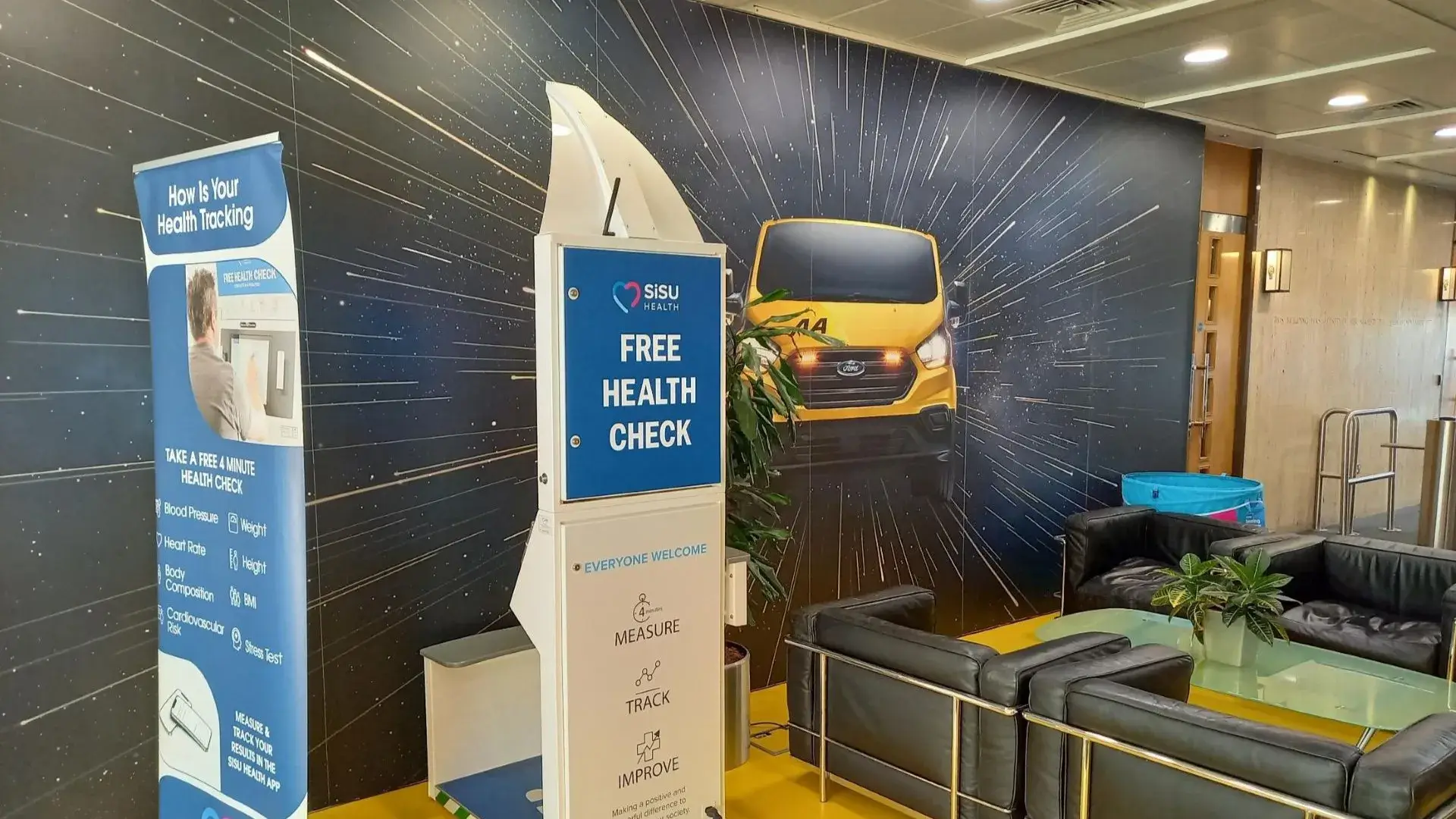
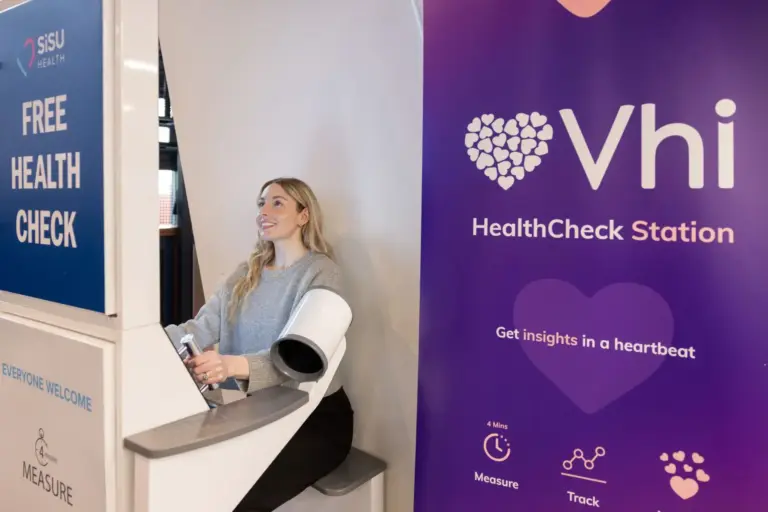
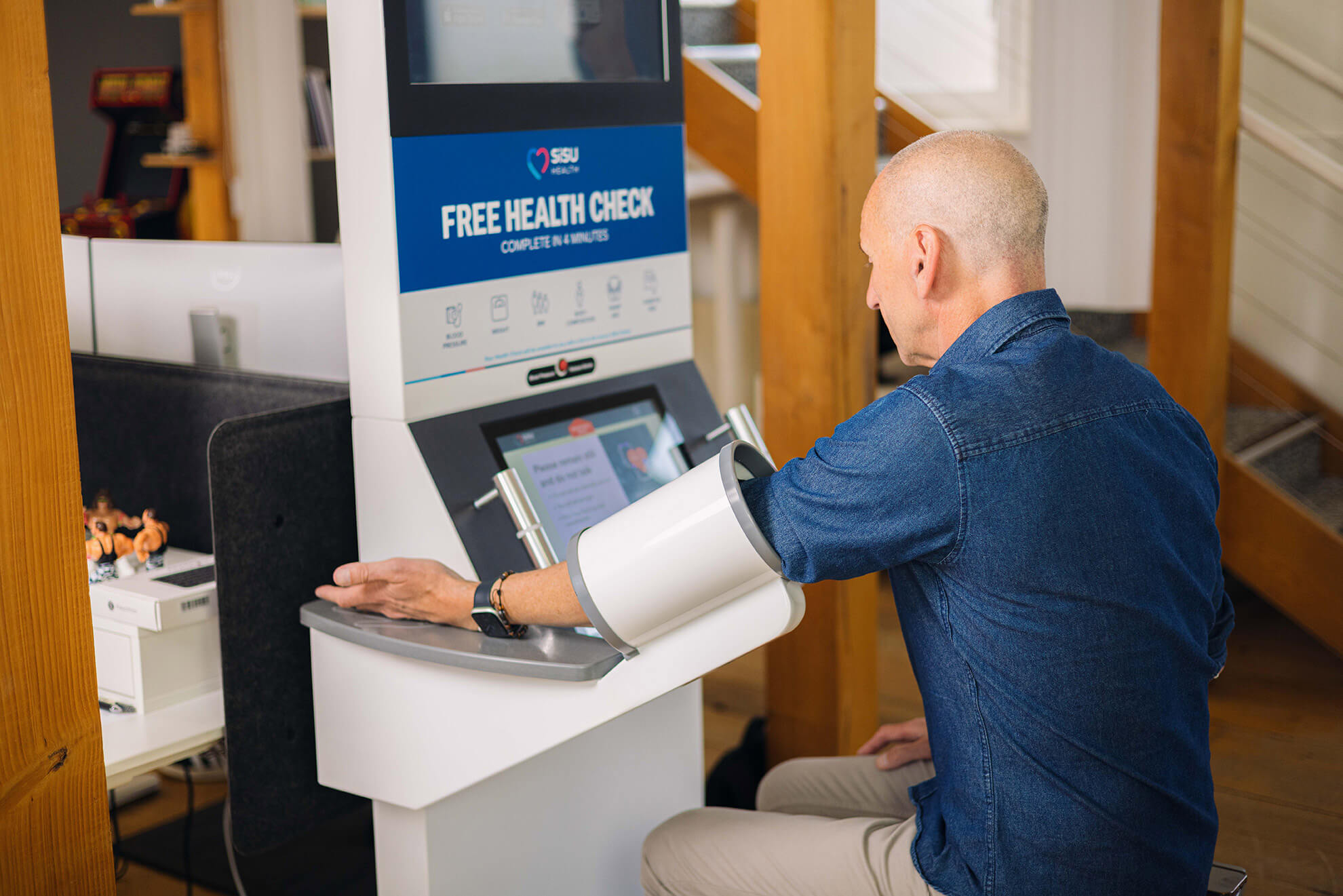
Rather than expecting employees to actively seek out wellbeing support, The AA brought preventative health directly into the workplace through a rotating programme of Health Stations across 11 UK locations.
Everything just turned up and worked…
The main thing for me was just how easy it was to use… And it looked modern in our modern office. It all just flowed nicely.
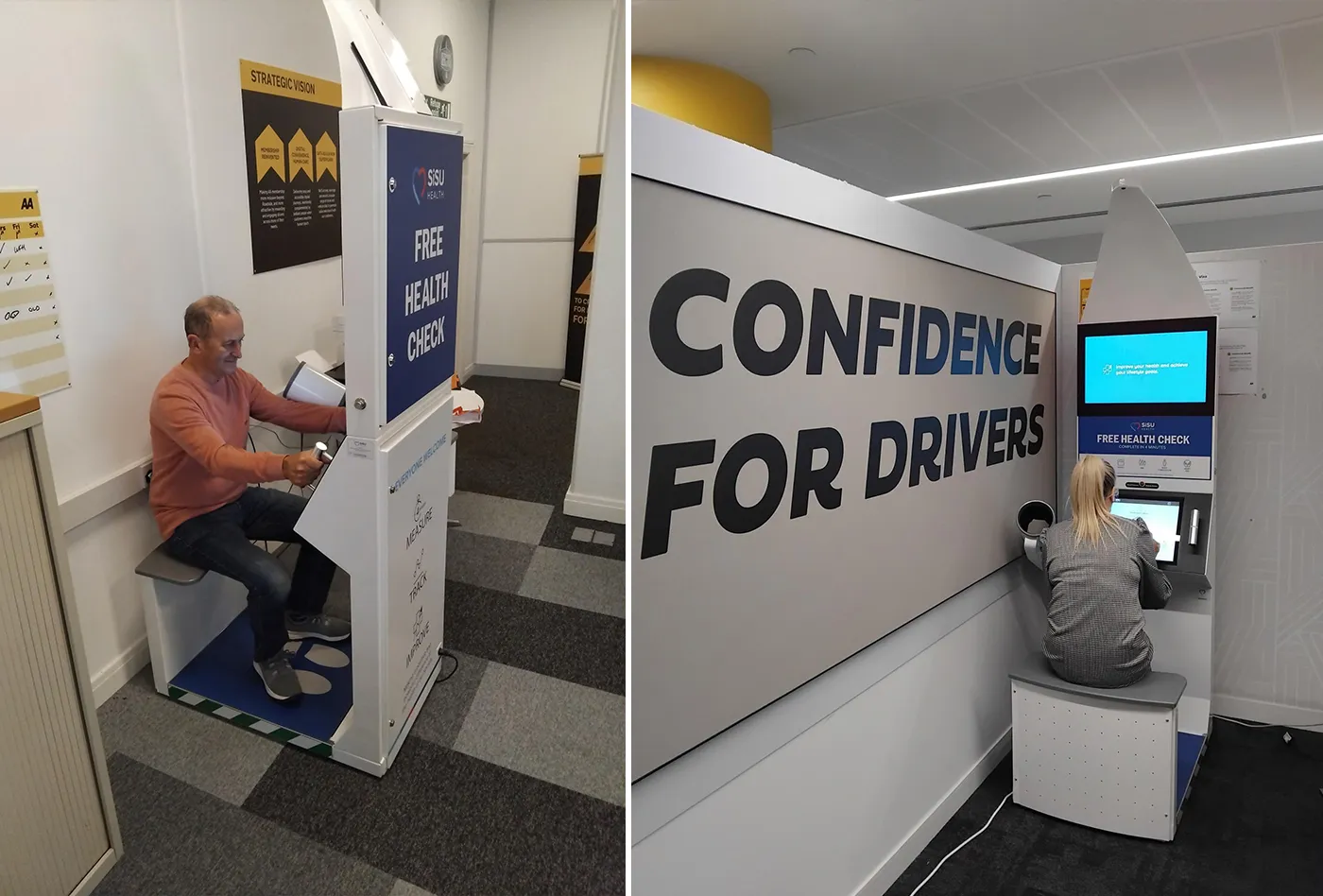
Deployments were planned to maximise access across the organisation, with larger offices hosting the stations for longer while ensuring colleagues across the wider estate also had the opportunity to take part.
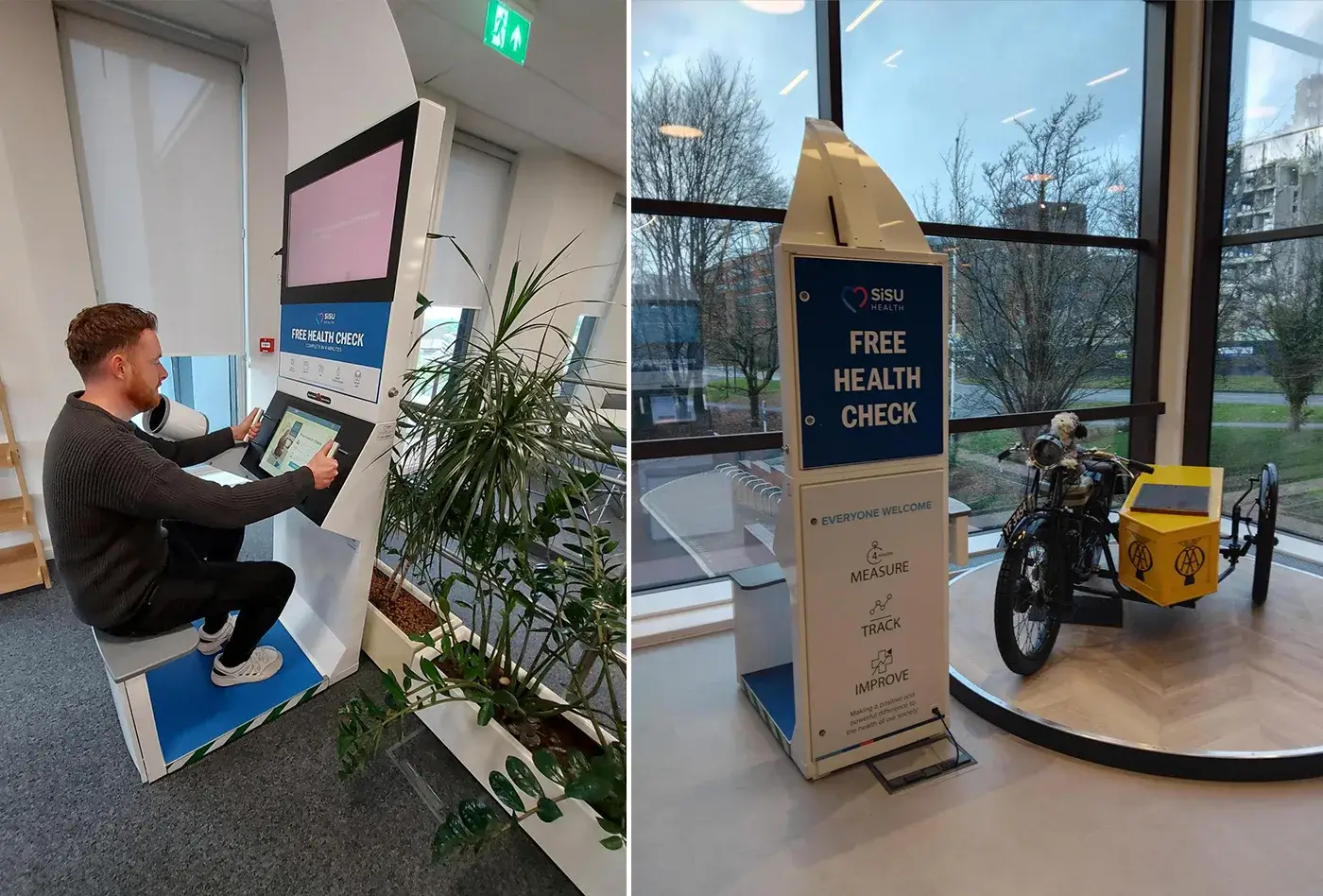
Just as importantly, the stations were positioned where employees would naturally see them throughout the day. Combined with internal promotion through The AA’s communication channels, this visibility helped create curiosity and encouraged employees to engage in their own time.
Having that physical thing there, people are walking past it all the time. It’s easy to think, ‘I’ll use that!’
The visibility proved so effective that, in some locations, employees began using the Health Stations before promotional communications had even been published.
Before my articles went live, I went down to test out the machine myself and there was someone waiting… It just sold itself.
Beyond the health checks themselves, employees could also be signposted towards relevant support including The AA’s Employee Assistance Programme, virtual GP service, physiotherapy and nutrition services. This helped turn health insights into meaningful next steps.
The impact – High participation, earlier intervention and measurable behaviour change
Over a two-and-a-half-year period, the programme delivered 2,108 health checks across 11 locations, with 1,525 employees choosing to complete a health check.
The programme also highlighted several wider health risks across the workforce:
- 71.7% of participants were overweight or obese
- 15.5% recorded high blood pressure
- 16.3% identified as smokers
- 710 employees presented with at least one risk factor
- 27.7% were living with two or more co-morbidities
- 505 employees received a recommendation to consult their GP
The results demonstrated that making preventative health more visible and accessible can encourage employees to engage with their wellbeing, while generating valuable insights into workforce health.
One of the clearest findings was the number of employees who had not recently monitored their blood pressure. Across all participants, 73.2% reported they had not had a blood pressure check in the previous 12 months, reinforcing the importance of bringing simple health checks into the workplace.
For Rebecca, the blood pressure findings reinforced the value of making health checks easily accessible during the working day.
It’s giving people insight they wouldn’t have otherwise had. It’s obviously free. It’s really convenient because they’re in the office anyway. I think that makes it a really good proof point of the value.
Importantly, the programme wasn’t just identifying risk – it was encouraging positive change. Among employees who returned for repeat health checks, The AA recorded a 36.4% reduction in high blood pressure and a 40.4% reduction in smoking, demonstrating how regular access to health insights can help support healthier behaviours over time.
Strategic value – From workforce insight to targeted wellbeing action
For The AA, the greatest value extended beyond the individual health checks.
The programme provided objective workforce health data that highlighted previously unseen trends, helping the wellbeing team better understand where future support could have the greatest impact.
One finding stood out more than any other.
Our biggest outlier was the high BMI. I didn’t expect that to be the highest thing.
Rather than simply reporting the findings, Rebecca used those insights to shape future wellbeing activity. The results prompted greater emphasis on physical activity, healthier lifestyles and nutrition through ongoing wellbeing communications, while increasing awareness of existing support including nutrition appointments and virtual GP services.
It’s made me think about things to promote within our wellbeing offering, and it’s changed the things I’m focusing on.
The reporting also encouraged wider conversations about workforce health, including why smoking rates differed between locations and whether aspects of the working environment could be influencing employee behaviour.
Beyond the data and health outcomes, the programme also gave The AA a way to demonstrate its commitment to employee health.
It was that real visibility of something that we’re doing for people’s wellbeing… I wouldn’t be surprised if I get a question at some point in the future: ‘Are the machines coming back?’
Make preventative health easier to access for your workforce
The AA’s experience shows that when preventative health is visible, convenient and backed by meaningful insight, more employees engage, hidden health risks are identified earlier, and organisations are better equipped to target future wellbeing support.
If you’re looking to improve participation, better understand the health needs of your workforce, or build a more evidence-led wellbeing strategy, talk to our team about how SISU Health could help.

Client Profile
The AA
The AA is a trusted UK motoring organisation, supporting drivers nationwide through breakdown cover, insurance, driving services and vehicle maintenance solutions.
More employer success stories
Discover how employers are improving wellbeing engagement and health outcomes.




Make workplace health work for your whole workforce
Discover how SISU Health can help you reach more employees, identify risks earlier and connect them with the right support.