Almost 50% of Amtico International’s approximately 600-strong UK workforce completed a health check, creating an evidence base that its wellbeing taskforce could not get from national trends or assumptions alone. The findings revealed where blood pressure, weight and smoking risks were concentrated, generated 100 GP calls to action, and translated three priority risks into estimated productivity costs. Amtico now has a clearer basis for deciding where preventative support should be focused.
At Amtico, the need for better workforce health insight started with a practical access problem. Operational employees told the wellbeing taskforce that shift patterns and working hours made accessing GP services difficult.
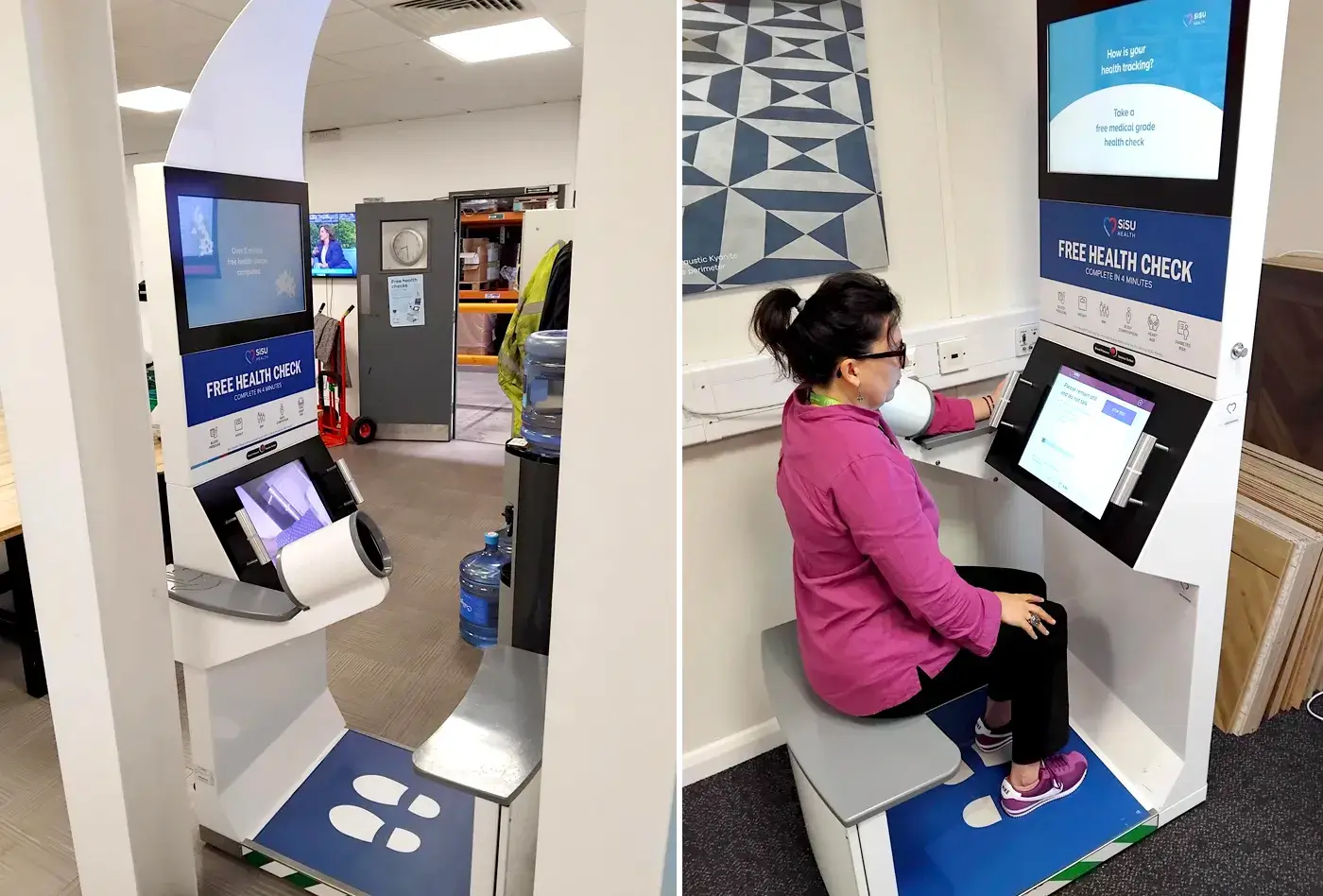
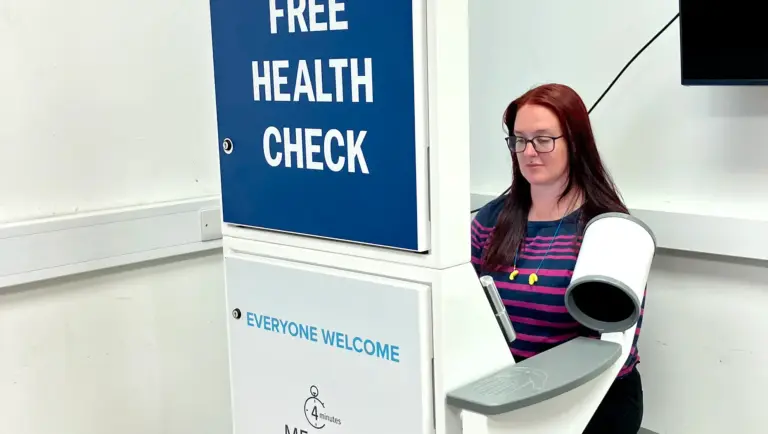
Between 18 June 2025 and 4 June 2026, Amtico ran four SISU Health Station deployments spanning two Coventry sites (including Pilot Park), Solihull and its People Conference. Employees gained a convenient and confidential way to check their health, while the wellbeing taskforce gained anonymised population data it could use to understand risks across the workforce.
Headline results included:
- 299 employees participated, representing almost 50% of Amtico’s approximately 600-strong UK workforce – with a total of 384 health checks
- 65.5% of participants had not had a blood pressure check in the previous 12 months – while 100 GP calls to action were triggered by high blood pressure or a high BMI
- 143 participants had at least one of three key risk factors: high blood pressure, obesity or smoking – 28% of those at risk had two or three of these risk factors
- Repeat-user reporting recorded a 25% reduction in high blood pressure and a 9.1% reduction in smoking
The challenge – Understanding the real health needs of Amtico’s operational workforce
Employees were telling Amtico’s wellbeing taskforce that accessing healthcare was not straightforward. Securing a GP appointment meant the lottery of joining a long early-morning telephone queue, while shift patterns made attending appointments during conventional hours difficult for operational employees.
Amtico already offered healthcare support through Westfield Health, but using it still required employees to contact and speak to someone. And for colleagues concerned about privacy – particularly around men’s health and mental health – there was some resistance.
There was also an engagement challenge. Some operational employees didn’t recognise traditional wellbeing activity as relevant to them.
They hear the word wellbeing and they think of candles and yoga mats. When we were able to offer an initiative like this, they could see that this was actually a solution for them to get involved in the wellbeing conversation.
Charlotte Mills, Employee Experience and Wellbeing Advisor, Amtico International
Alongside improving access, Amtico wanted to understand what its employees genuinely needed. The wellbeing taskforce could research national trends and follow popular themes, but that would not reveal which risks were most relevant to Amtico’s workforce – or where support could have the greatest value.
It’s all well and good me going away and researching the trends in wellbeing. If you don’t ask employees what they need and what they want, then you’re not going to know. It’s almost a waste of time.
Charlotte Mills
The challenge was to make preventative health easier for operational employees to access and turn their participation into evidence that could guide Amtico’s wellbeing priorities.
The solution – Giving operational employees private access and Amtico a clearer health picture
Amtico’s wellbeing and health and safety teams first encountered SISU Health at a workplace wellbeing event in Birmingham. After completing health checks themselves, the team saw a combination that suited the organisation: a straightforward employee experience and detailed workforce reporting.
We were immediately impressed by how simple, accessible and user-friendly it was. The data and the quality of the report also stood out. It was such a key benefit for me to have access to that afterwards.
Charlotte Mills
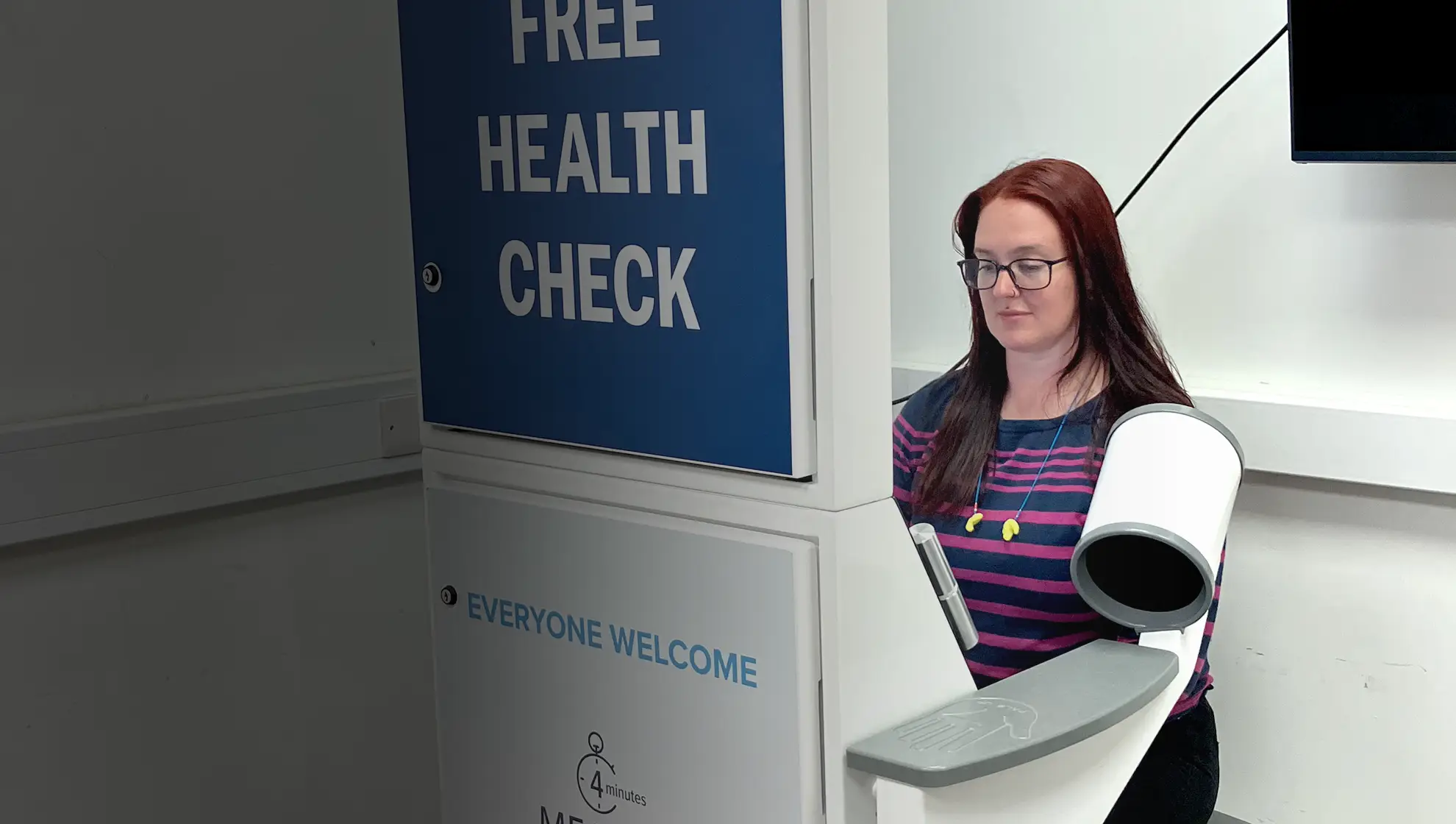
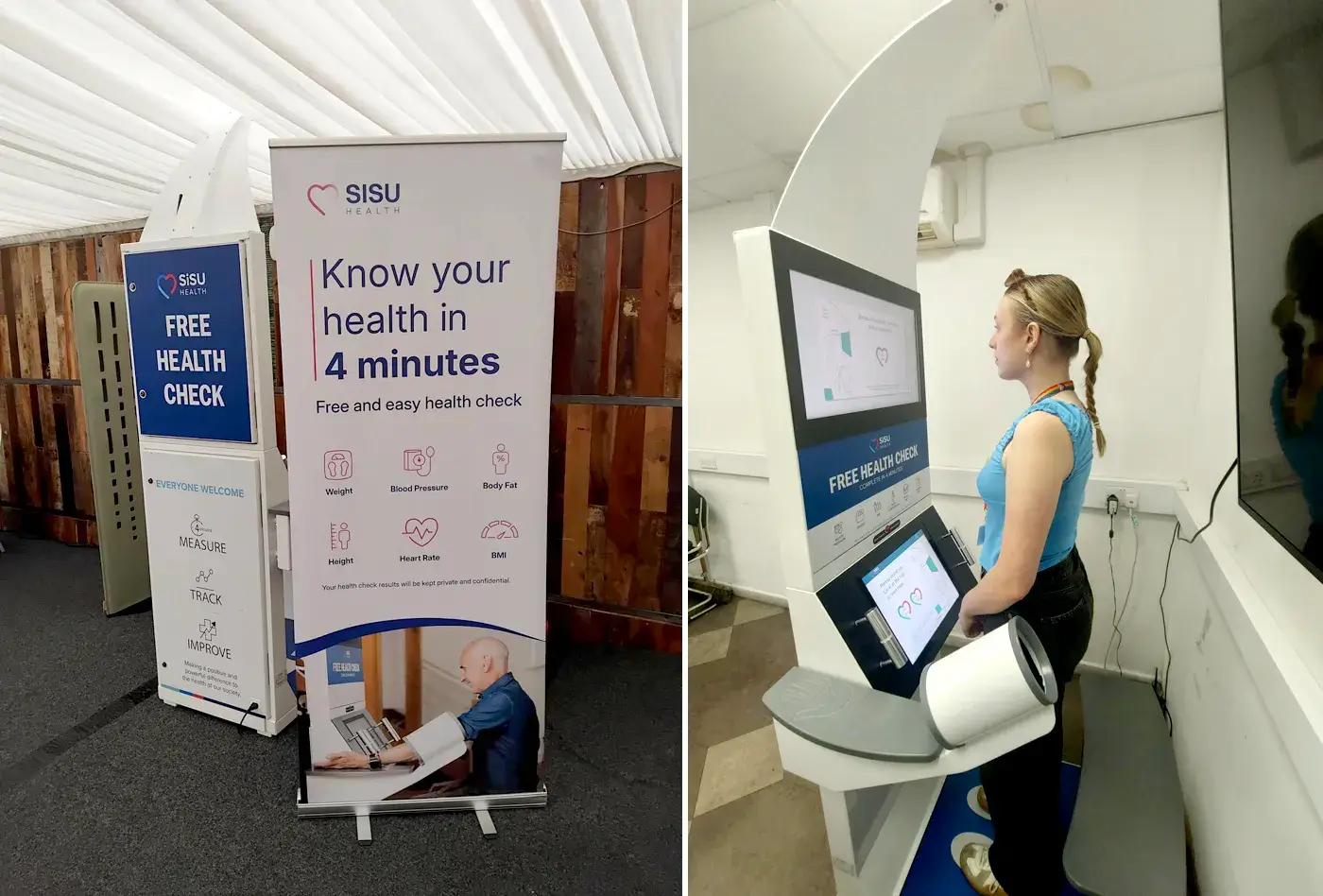
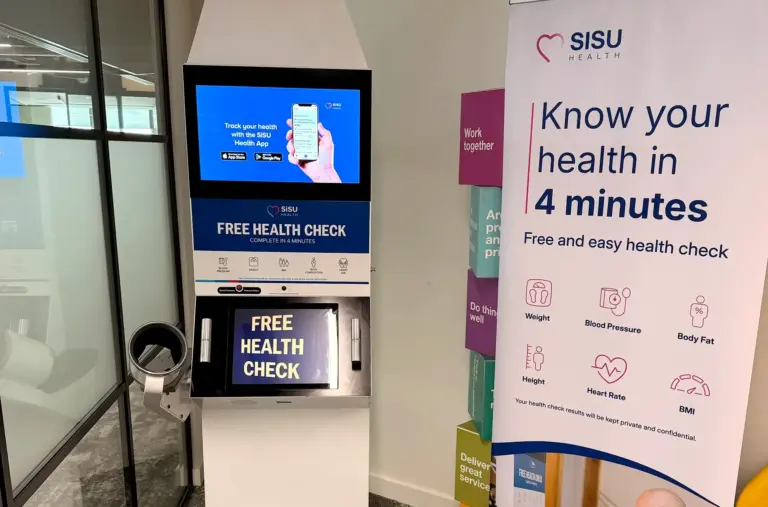
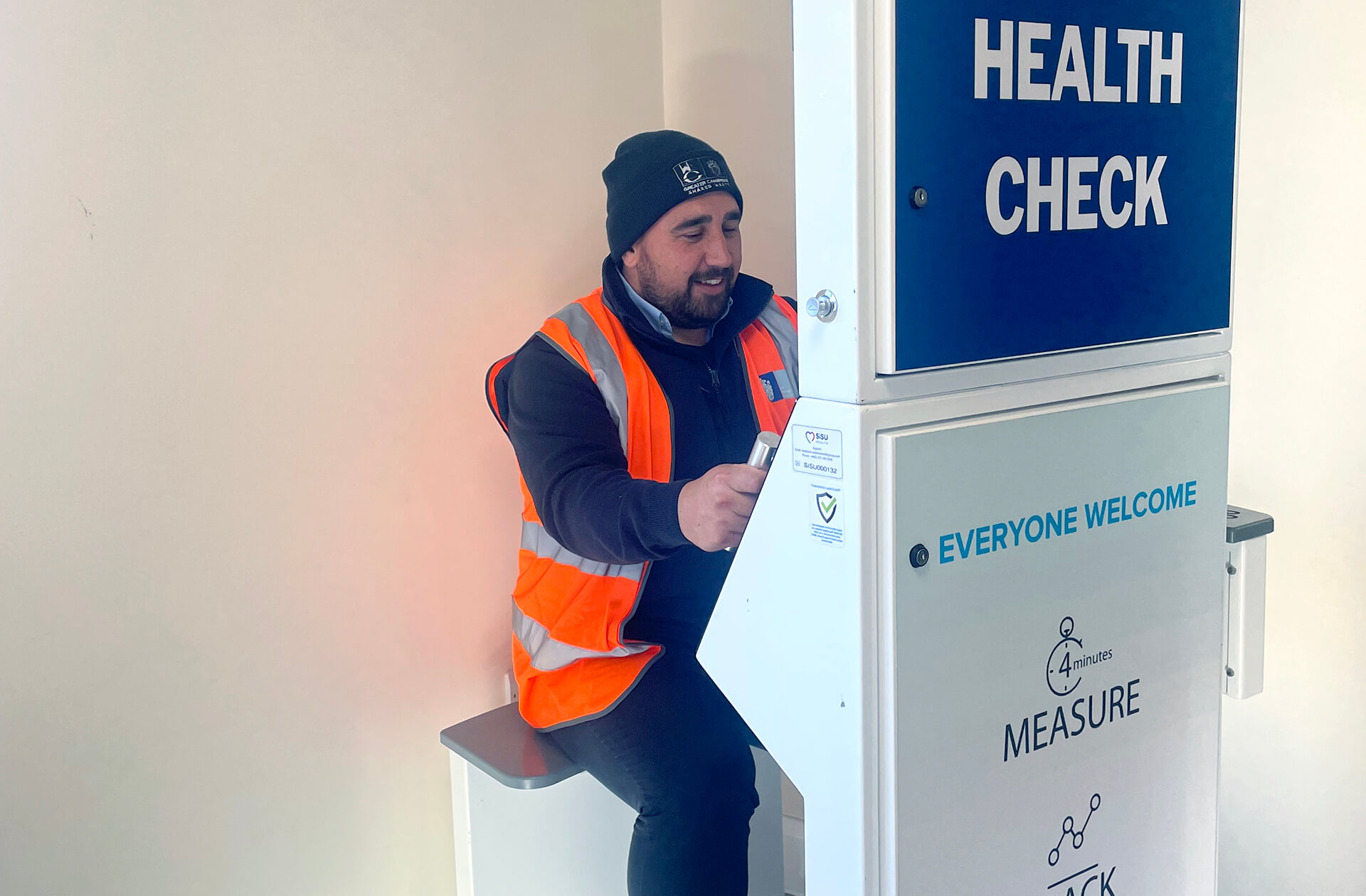
The Health Stations gave employees immediate access to measures including blood pressure, BMI, body fat and Heart Age without needing to book an appointment or discuss their results with someone face to face. The health-check journey could be completed in different languages, helping reduce access barriers for employees whose first language wasn’t English.
I was nervous to start with, but the machine was really easy to understand. Each screen gave me simple information without overloading me.
Becky Charles, Health and Safety Manager, Amtico International
During each deployment, the stations were available to office-based and operational employees across working and shift patterns, with sales colleagues also given access at the People Conference. Amtico promoted them through emails, its intranet and posters, while visible backing from its HR Director and senior leaders helped ensure employees were given time to complete a check during the working day.
Once people began using the stations, peer-to-peer conversation became an important source of engagement – particularly around Heart Age.
One of the guys used the machine and said, ‘My heart age is this,’ then went back out and said, ‘You need to try this machine because I want to see what your heart age is.’ It was a big talking point that week.
Charlotte Mills
Amtico also used the health-check journey to connect employees with support already available within the business.
Employees could be shown a QR code linking to Westfield Health after completing relevant health questions, or directed to Amtico’s Mental Health First Aid resources following questions about stress. The SISU Health App was promoted so employees could retain their results and compare them when they returned for another check.
We never wanted it to be, ‘Just put one of these machines on site and use it if you want to.’ It needed to be part of a bigger discussion.
Charlotte Mills
The reporting brought together participation, health risks and potential impact. Amtico could review an overall health and activity summary, compare findings across sites and against wider industry and population benchmarks, see where risks overlapped, and review risk rankings alongside estimated lost-productivity costs.
The impact – Identifying 143 at-risk employees and triggering 100 GP calls to action
Across the four deployments, 299 employees completed 384 health checks. Against an approximately 600-person UK workforce, this represented close to 50% of employees and gave Amtico evidence of several significant workforce health risks:
- 19.8% of participants recorded high blood pressure
- 66.1% were overweight or obese
- 18.5% identified as smokers
- 143 participants recorded at least one of three key risk factors: high blood pressure, obesity or smoking
- Of those participants, 28% had two or all three risk factors
The number of people who had not recently checked their blood pressure was particularly important. Almost two-thirds of participants reported that they had not received a blood pressure check during the previous 12 months.
Across the programme, high blood pressure or a high BMI triggered 100 calls to action recommending further support from a GP.
The immediate access to results prompted employees to ask questions and consider what they needed to do next.
Employees were saying, ‘I didn’t realise my blood pressure was that high. I need to make sure I book a doctor’s appointment.’ Those little interactions showed us again how important this initiative was.
Charlotte Mills
The reporting also showed that risks were not evenly distributed across the workforce. Among male participants, 64% recorded blood pressure in the high-normal range or above, compared with 39% of female participants. Elevated BMI affected 73% of male participants and 58% of female participants, while high body fat was recorded for 58% of men and 34% of women.
For employees who returned for another check, the data provided early evidence of improvement over time.
Repeat-user reporting recorded a 25% reduction in high blood pressure across a 43-user cohort and a 9.1% reduction in smoking across a 62-user cohort.
It made me realise I wasn’t helping myself as much as I thought I was. It helped me understand what might be affecting me and gave me simple steps to make changes. I’m now exercising more and eating better.
What I liked was that the machine didn’t overload me with hundreds of different things I needed to do in one go. It focused on small changes that felt achievable.
Becky Charles
These results gave individual employees greater visibility of their health while giving Amtico a much more detailed understanding of where risks existed and which groups could benefit from additional support.
Strategic value – Giving Amtico’s leaders evidence to prioritise action
The greatest organisational value came from turning hundreds of individual checks into a workforce-level view that Amtico could take into senior leadership discussions.
The overall health snapshot made the scale of different risks immediately visible. Rather than asking leaders to respond to general wellbeing trends, the team could show what employees’ results were revealing across Amtico’s own workforce.
The stats stop you and make you think, ‘Hang on a second, we need to start talking about this and doing something about it.’
Charlotte Mills
The reporting estimated the potential lost-productivity costs per annum:
- £187,875 associated with smoking
- £127,056 associated with obesity
- £19,020 associated with high blood pressure
They gave Amtico a way to consider the scale of identified health risks in a business context and strengthen discussions about where preventative support should be focused.
The risk ranking by participant count and lost-productivity costs helps support discussions with senior leadership and the board. That’s the stuff senior leaders want to see.
Charlotte Mills
Site-level analysis helped the wellbeing taskforce see where individual risks were more prominent, while the comorbidity reporting showed how frequently blood pressure, obesity and smoking risks appeared together.
Comparisons with wider manufacturing and population benchmarks provided another point of reference and helped Amtico recognise where its findings required greater attention.
Those insights are already influencing Amtico’s wellbeing activity. The organisation introduced further cholesterol and diabetes checks, promoted existing support including Westfield Health and Mental Health First Aid, and is considering more focused activity around smoking cessation, physical activity and healthy lifestyles. The findings are also helping the wellbeing taskforce decide which messages and services should be prioritised rather than treating every wellbeing topic equally.
This data has been invaluable in helping us understand employee health trends and identify the wellbeing initiatives that will have a better impact. Data is everything. The facts are there for you.
Charlotte Mills
For Amtico, the Health Stations have therefore become more than a way for employees to receive a set of results. They have provided a stronger evidence base for preventative health, given leaders greater visibility of workforce needs and created a foundation for more targeted action.
The data has given us a strong foundation and now the challenge is understanding what’s next. How do we continue supporting employees? How do we maintain that momentum and keep health and wellbeing conversations active throughout the year?
Charlotte Mills
Replace wellbeing assumptions with evidence from your workforce
Amtico’s experience shows how accessible health checks can turn employee participation into evidence leaders can use – revealing priority risks, strengthening the case for preventative support and helping wellbeing teams focus their activity.
If you want to move beyond assumptions and build a clearer picture of your workforce’s health needs, talk to our team about how SISU Health could support your organisation.
Client Profile
Amtico International
Amtico International designs and manufactures luxury vinyl flooring for commercial and residential spaces. Its UK operations are centred in Coventry, where around 600 people work across manufacturing, operations, sales and office-based roles.
More employer success stories
Discover how employers are improving wellbeing engagement and health outcomes.



Take health checks to where your people work
Find out how SISU Health can help you reach colleagues across shifts and sites, and use their results to decide where to focus wellbeing support.