
Peterborough City Council needed a more accessible way to reach residents who were less likely to engage with traditional prevention services. By brining SISU Health Stations into community settings, the programme delivered 7,807 health checks, identified significant unmet need and helped connect residents to earlier support.
Peterborough City Council’s public health team is focused on prevention and early intervention, with priorities including cardiovascular health, smoking reduction, NHS Health Check uptake, healthy weight and reducing health inequalities.
But like many local authorities, Peterborough faced a familiar challenge. Traditional services do not always reach the residents most at risk.
For people living with undiagnosed or unmanaged cardiovascular risk factors, earlier identification can make a significant difference. Yet uptake of NHS Health Checks remained challenging among working-age adults, routine and manual workers, and people who do not regularly engage with healthcare.
As Femi Varudi, Senior Public Health Improvement Officer for Behaviour Change and Smoking at Peterborough City Council, explained:
We wanted to explore innovative ways of bringing health checks into community settings where people already lived and where they worked and where they spent their time.
Between 12 October 2024 and 30 May 2025, SISU Health Stations helped Peterborough City Council:
- Deliver 7,807 health checks
- Engage 6,314 participants
- Reach 3,213 people who had not had a blood pressure check in the previous 12 months
- Identify 3,189 participants with at least one major health risk factor
- Trigger 1,879 GP call-to-actions
The challenge – Traditional prevention services were not reaching enough at-risk residents
Peterborough City Council wanted to improve early identification of health risk and support residents before conditions became more serious.
The need was clear. Many residents were living with diagnosed or unmanaged cardiovascular risk factors, including high blood pressure, obesity and smoking-related health risks.
However, existing prevention routes were not always reaching those who could benefit most.
Although the NHS Health Checks still remains an important programme, the uptake was quite challenging, especially amongst working aged adults and routine and manual workers or people who don’t regularly engage with healthcare.
This created a prevention gap.
Residents who were not regularly accessing healthcare could be living with significant risk factors without knowing it. For high blood pressure in particular, this posed a major challenge.
Peterborough City Council needed a way to make preventative health checks more accessible, more visible and easier to engage with outside traditional healthcare settings.
We wanted to explore innovative ways of bringing health checks into community settings where people already lived and where they worked and where they spent time.
The solution – Bringing health checks into everyday community locations
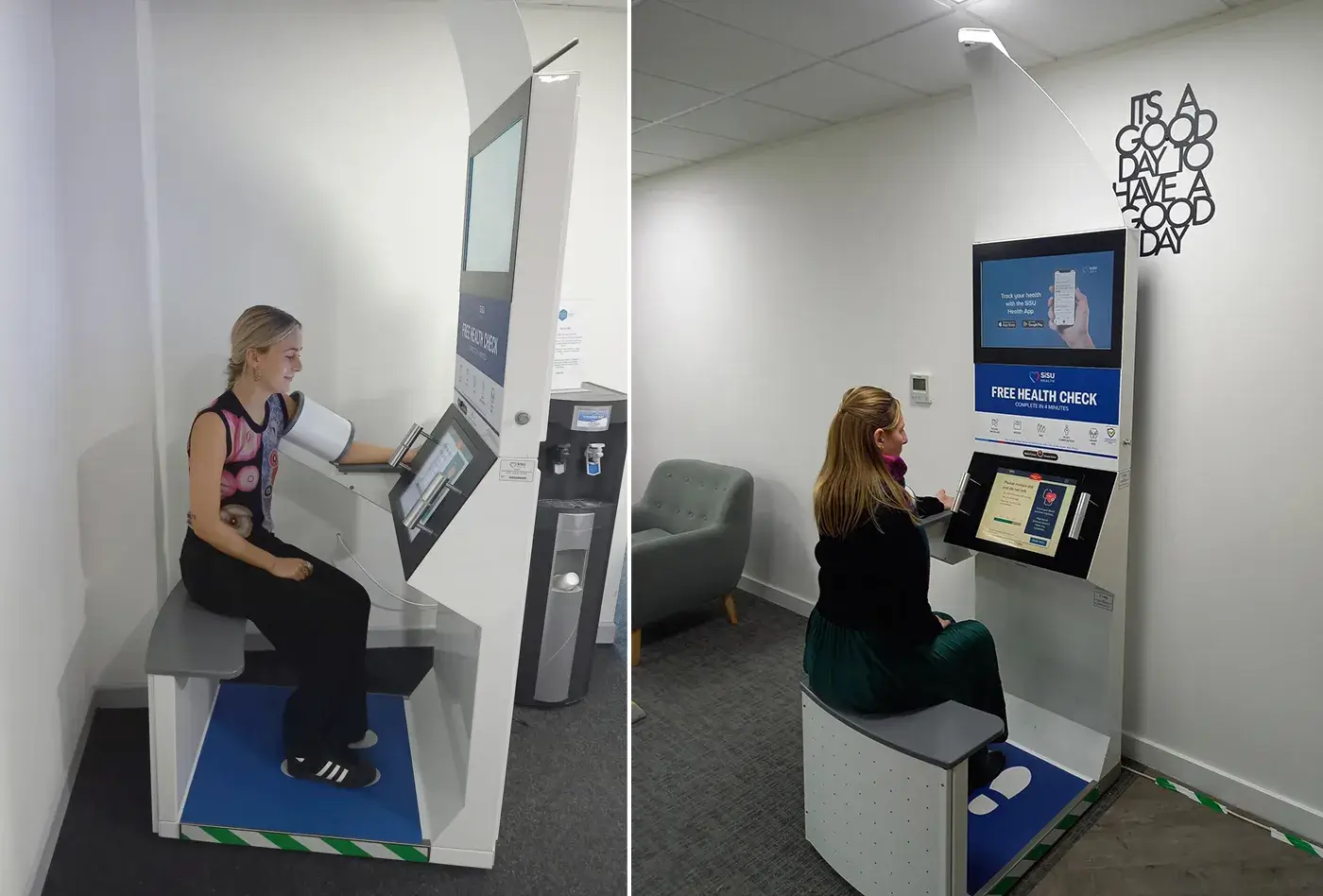
Peterborough City Council deployed SISU Health Stations across 12 locations, selected based on accessibility, footfall and the opportunity to reach priority populations.
Locations included workplaces, hospitals and council settings, helping bring health checks closer to where people already spend time.
For Femi, the value of community deployment was clear:
Prevention services need to meet people where they are.
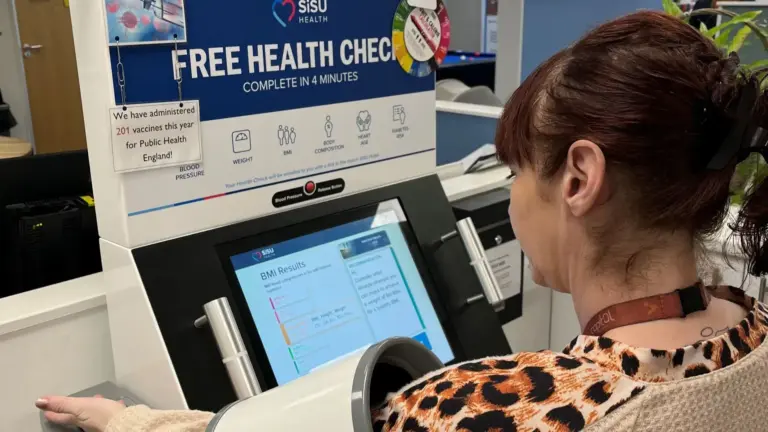
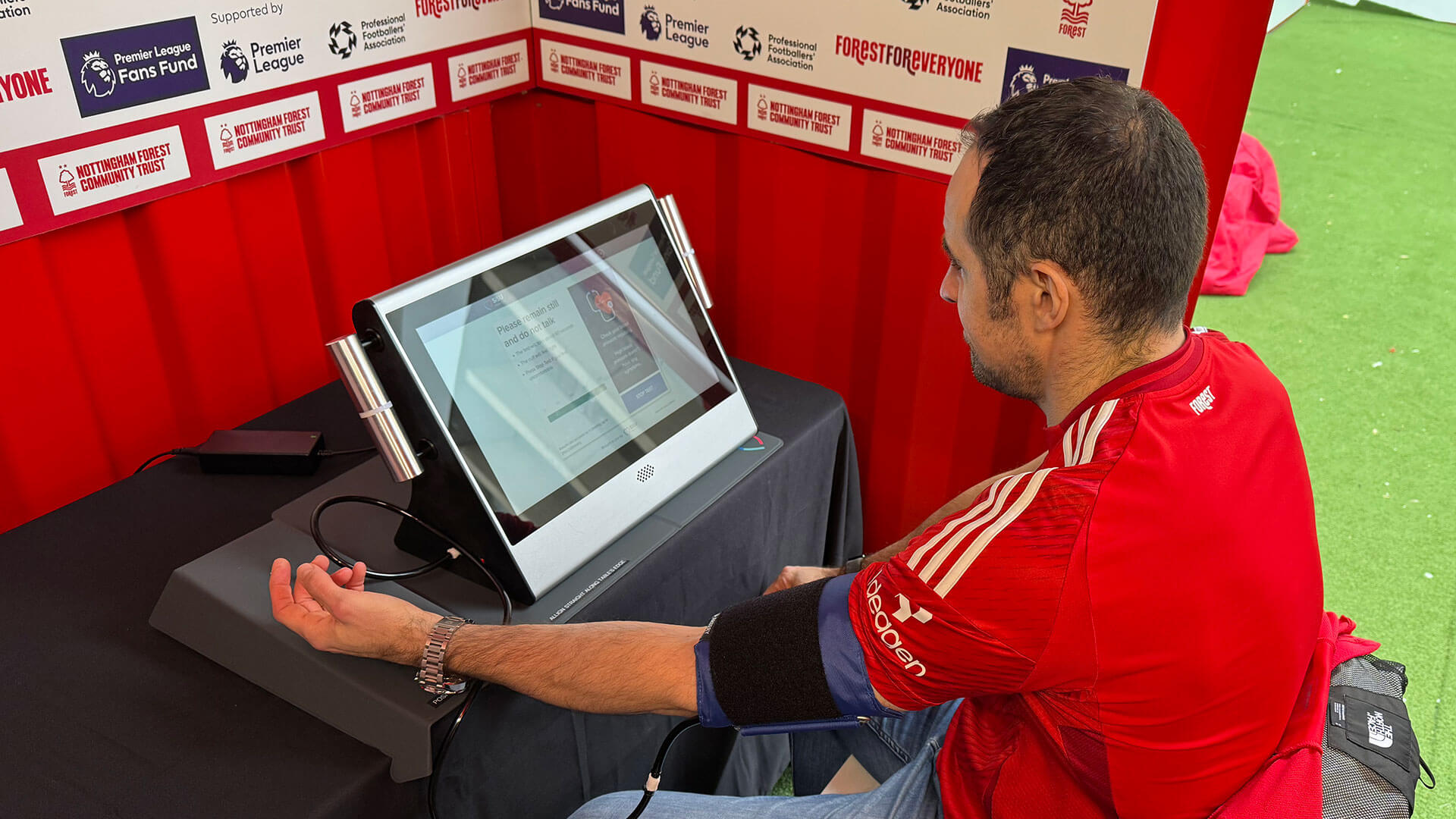
Rather than relying on residents to proactively seek out appointments or traditional services, SISU Health Stations created a visible, self-service way for people to check key health metrics quickly and conveniently.
Users could complete a health check, receive immediate results and access practical information about improving their health.
Feedback from residents highlighted the importance of accessibility:
It was the convenience, the ease of use and the speed of the assessment. They also appreciated receiving immediate results and practical information about improving their health.
The impact – High engagement uncovered significant unmet need
Between 12 October 2024 and 30 May 2025, the programme delivered 7,807 health checks across 6,314 participants.
The data showed that Peterborough City Council was reaching a population with meaningful prevention needs:
- 14.5% recorded high blood pressure
- 72.3% were overweight or obese
- 16.5% were smokers
- 3,189 participants recorded at least one major health risk factor
- 26% of those with at least one risk factor had two or more co-morbidities
- 1,879 GP call-to-actions were triggered
One of the most significant findings was that 3,213 participants had not had a blood pressure check in the previous 12 months.
For a public health team focused on cardiovascular prevention, this highlighted the scale of hidden risk in the community.
This is highly significant. High blood pressure is often described as a silent killer because many people don’t have any symptoms.
The programme also reached residents who may not otherwise have known they were at risk.
One of the strongest themes was the number of residents who were unaware of their health risks. The data reinforce the importance of taking prevention into community settings and highlighting the continuing need to address cardiovascular health inequalities.
Connecting residents into support and action
Peterborough City Council did not view the Health Station as a standalone intervention.
Instead, it acted as an accessible entry point into a wider prevention journey, helping residents identify risk earlier and connect with appropriate support.
The station did provide an initial engagement point, but I think the real value came from linking residents into the wider support services such as NHS, the full health checks, smoking station and primary care services.
This included signposting residents towards lifestyle services, smoking cessation support, weight management programmes and primary care follow-up.
For residents with health risks, this created an opportunity to take action before conditions worsened.
Community-based identification allows early intervention and it supports our residents to access lifestyle services, smoking station support, weight management programmes and primary care follow-ups before their health conditions get worse.
The programme also encouraged some residents to consider positive lifestyle changes, including reducing alcohol intake or seeking support to stop smoking.
Among repeat users, the data showed encouraging improvements:
- 53.8% drop in high blood pressure
- 10.6% drop in high body fat
- 22.6% drop in smokers
It was really encouraging. Whilst behaviour change can be difficult to achieve, these findings demonstrated that provided accessible health information and signposting to support services can contribute to measurable improvements in health outcomes.
Strategic value – Turning community engagement into population health insight
Beyond positive individual health outcomes, the programme generated evidence that informed future commissioning and prevention planning.
The Health Station data helped the team understand who they were reaching, where unmet need existed and how future prevention activity could be targeted more effectively.
The data did help us identify where unmet needs existed and it helped us make commissioning decisions to support targeting of future prevention programmes towards communities with the greatest health risks.
The reporting functionality was particularly valuable as it provided population level insights, but it also helped us identify opportunities for targeted interventions and also supporting any future planning.
This insight matters because prevention is not only a health issue. Poor health affects individuals, local economies, employers and healthcare systems.
The findings highlighted not only the health impact of preventable risk factors, but also their wider economic implications.
Over £7.8 million in estimated lost productivity costs were identified through the programme, which included:
- £4,064,409 from 2,189 participants with a BMI of 30+
- £3,517,744 from 1,026 smokers
- £285,369 from 867 participants with high blood pressure
For Peterborough City Council, the findings reinforced the wider economic case for prevention.
Prevention is really essential. Poor health does not only affect individuals, but also local economies, employers and healthcare systems. Investing in early intervention helps reduce demand on service and supports healthier, more productive communities.
Prevention works when it reaches people earlier
Peterborough City Council’s Health Station programme showed the value of making prevention more visible, accessible and community-based.
By taking health checks into places people already live, work and spend time, the council engaged thousands of residents, uncovering significant unmet need and connected people to earlier support.
For Femi, the impact she was most proud of was clear:
The ability to engage residents who would have remained unidentified and connect them to preventative support.
Community based health checks will continue to play an important part in supporting prevention, tackling health inequalities and complementing assisted NHS health provision.
Want to identify hidden health risks in your community?
Peterborough City Council showed how taking prevention into everyday community settings can help reach residents existing services miss, identify health risks earlier and connect people to meaningful support.
Whether your focus is cardiovascular health, health inequalities, NHS Health Check uptake or wider prevention objectives, SISU Health can help you engage more people, generate actionable insight and deliver prevention at scale.
Client Profile
Peterborough City Council
Peterborough City Council is a local authority providing public services across the city, including health, social care and community wellbeing.
More NHS & public health success stories
Discover how public health organisations are improving access to prevention and supporting better health outcomes.
View All Case Studies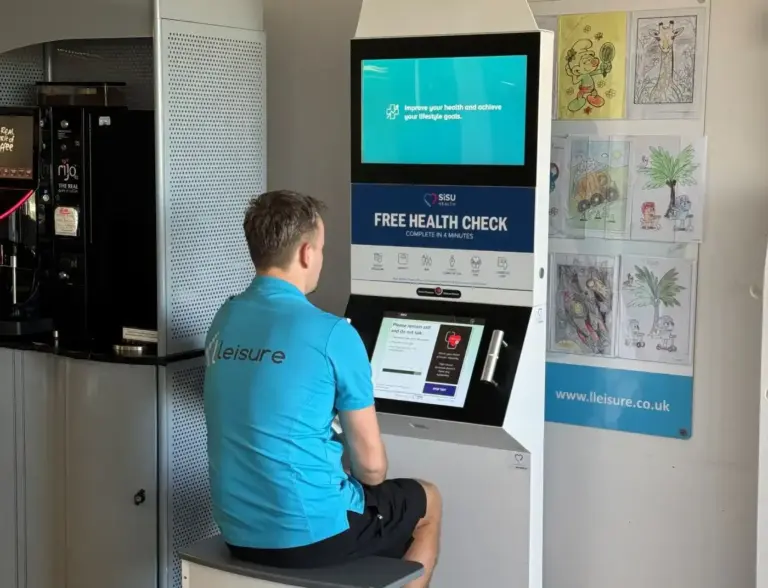




Transform prevention and early detection in your community
Work with us to deliver accessible, data-driven health solutions that reach underserved groups and support public health goals.