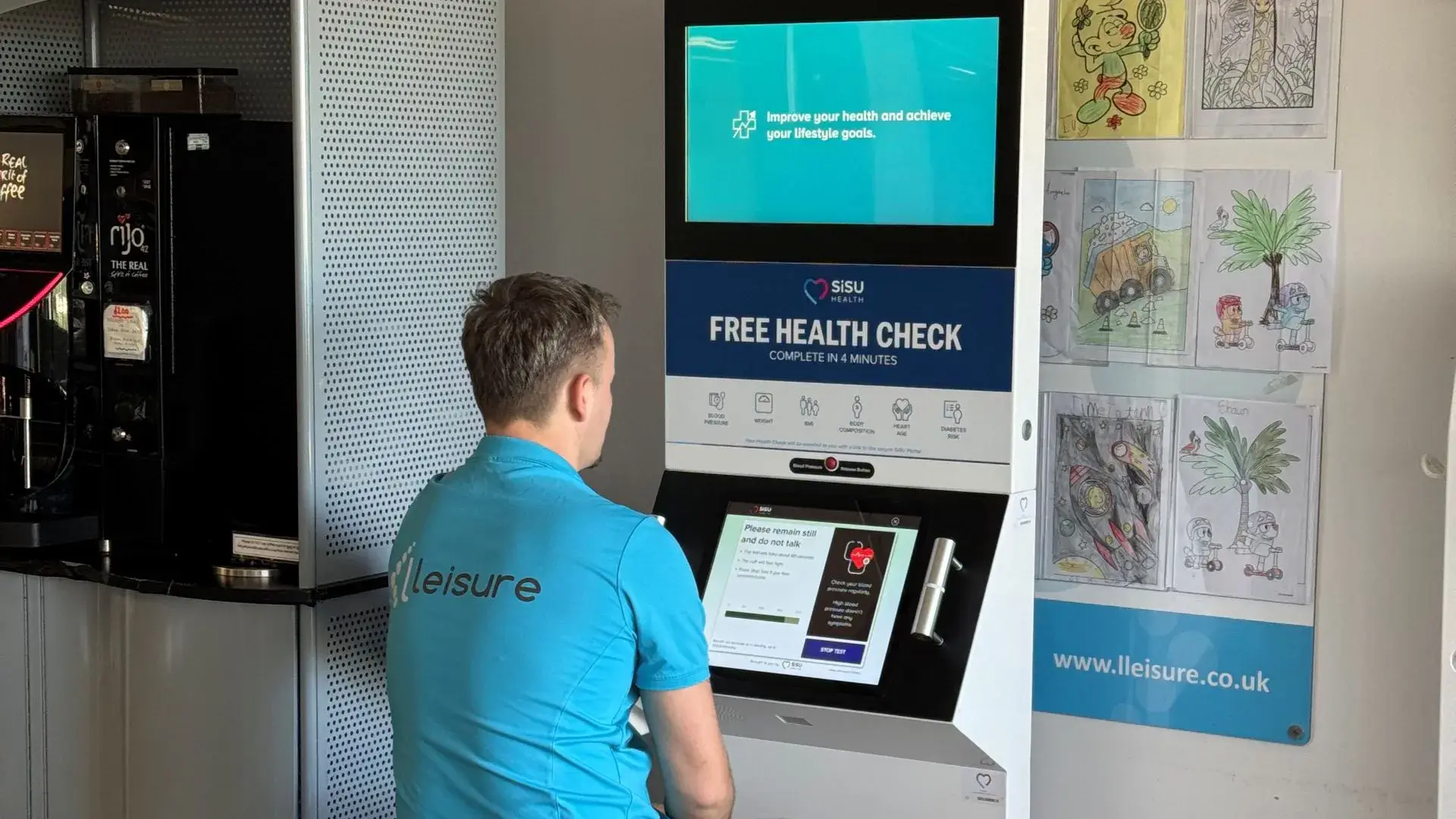
Lifestyle services can only improve health outcomes if people access them. By connecting community health checks with lifestyle support, SISU Health Stations helped Thriving Nottingham create an additional referral pathway – generating more referrals, extending the reach of preventative services and engaging people who are in the ‘pre-contemplation’ phase of change.
Preventative health programmes do not end when a health check is completed. Their value is realised when people understand their results, access appropriate support and take positive action to improve their health.
Working alongside Nottingham and Nottinghamshire ICB and Health Innovation East Midlands, Thriving Nottingham became a key referral partner within a wider community prevention programme that used SISU Health Stations to bring health checks into everyday settings.
Our Nottingham and Nottinghamshire ICB case study explored how that programme uncovered significant unmet prevention need by making health checks more accessible.
Here, we explore what happened next – how those health checks became a gateway into free lifestyle support delivered by Thriving Nottingham.
By integrating the service into the referral pathway, the programme created new opportunities to introduce residents to weight management, smoking cessation and physical activity support – including people who may never have discovered or accessed those services.
The challenge – Existing engagement activity could only reach so many people
Thriving Nottingham delivers free lifestyle support to residents across Nottingham City, helping people stop smoking, manage their weight, become more physically active and improve their overall health and wellbeing.
Like many community lifestyle services, its challenge was not the quality or breadth of the support available. It was ensuring more people knew that support existed and encouraging them to engage before preventable health risks became more serious.
The team already invested significantly in community engagement and partnership working. Dedicated health coaches supported priority populations, while engagement teams worked alongside community organisations and healthcare professionals to increase awareness, encourage referrals and improve access.
However, these approaches inevitably had limitations. Face-to-face outreach requires staff time and physical presence, while referrals from healthcare settings depend on people accessing those services in the first place.
This created a gap: residents who were unlikely to visit their GP, but equally unlikely to participate in organised community health activity.
As Allison Jackson, Head of Service at Thriving Nottingham, explained:
The machine gave us the opportunity to get the service in front of people who weren’t going to their GP, who weren’t accessing the healthcare system, but also who weren’t accessing community organisations… It gave us the opportunity to fill some of the gaps we were missing.
The opportunity was not to replace the existing referral pathways. It was to complement them with another route into preventative support – one capable of reaching people established engagement methods could not always access.
The solution – Turning community health checks into a pathway for lifestyle support
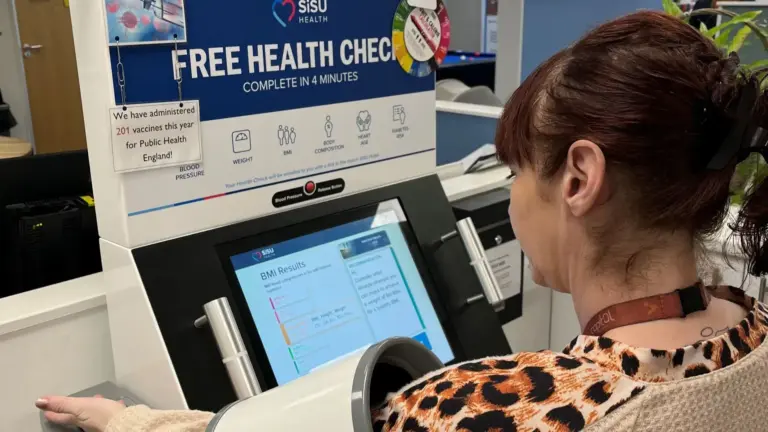
As part of Nottingham and Nottinghamshire ICB’s wider prevention programme, Thriving Nottingham became a key referral partner for people using SISU Health Stations in Nottingham City.
When a health check indicated that someone could benefit from additional support – for example, smoking cessation, weight management or physical activity – they were given the opportunity to refer themselves directly to Thriving Nottingham.
With the user’s consent, their details were shared with Thriving Nottingham, allowing its triage team to make contact and discuss the relevant support available.
Allison explained:
If someone triggered as a smoker, a screen would pop up saying there’s a free service in Nottingham that can help you quit smoking… People would simply click yes or no.
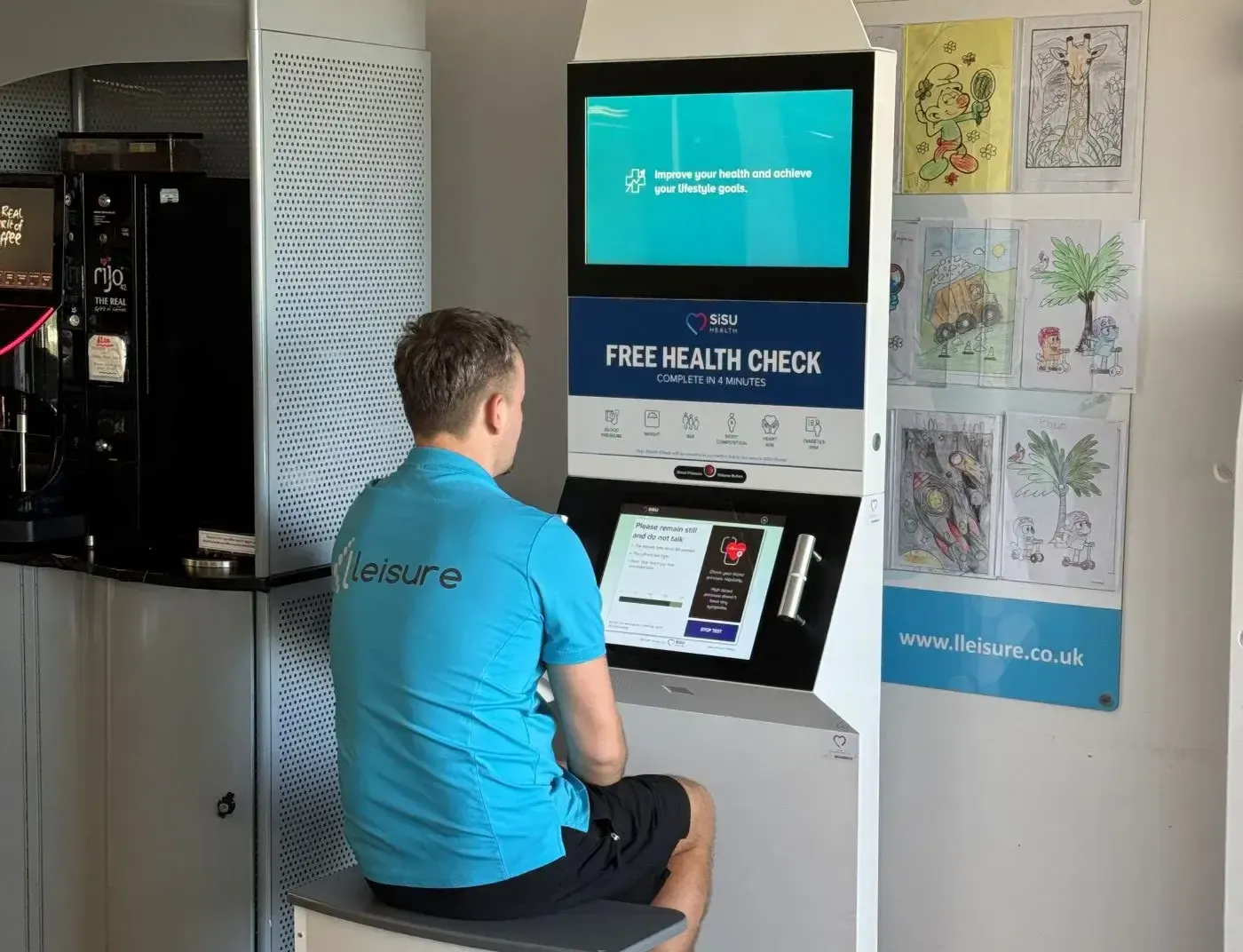
This transformed the health station from a standalone assessment into part of a connected prevention pathway. Alongside GP referrals, community outreach and self-referral, Thriving Nottingham gained an additional channel through which people could discover and access its services.
The same approach can also be adapted for different community settings.
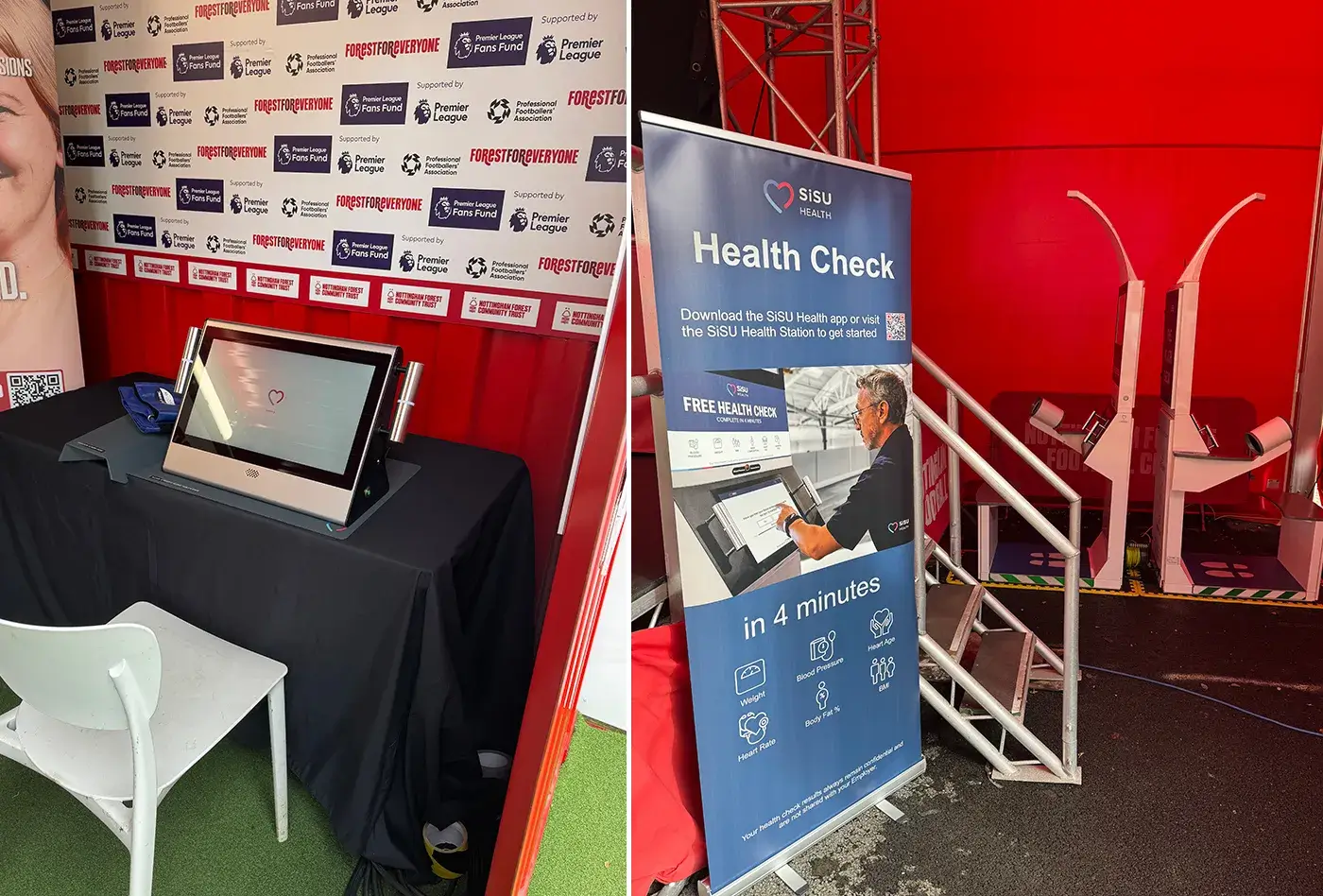
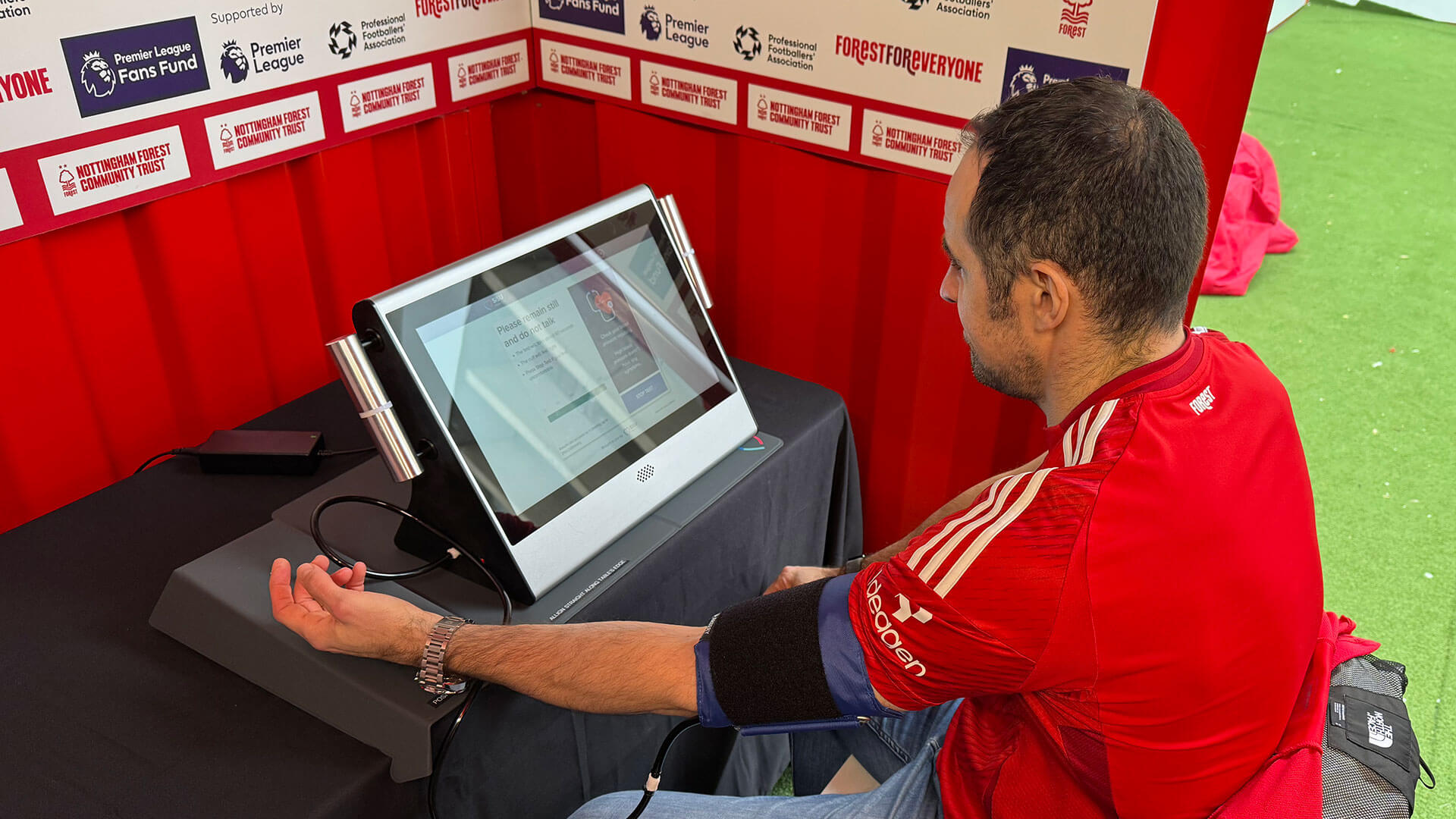
During a matchday health-check activation at Nottingham Forest’s City Ground, SISU Health Stations brought quick health checks into the Fan Zone. People could check indicators including blood pressure and BMI before being connected with relevant local support.
One supporter used the station, scanned the Thriving Nottingham QR code and signed up for its weight management service – demonstrating how placing assessment and support together can help turn a moment of health awareness into immediate action.
The impact – More referrals, greater visibility and extended reach
Connected community health checks with Thriving Nottingham created a measurable increase in referrals while introducing the service to residents it may not otherwise have reached.
At the programme’s initial peak, the health station generated around 50 referrals per week. Although volumes naturally settled as initial awareness reduced, it continued to deliver approximately 20-25 referrals.
Allison explained:
SISU Health increased referrals for Thriving Nottingham, particularly for people ready to explore making a positive Healthy Lifestyle change.
The value was not limited to people who immediately enrolled onto a programme. Each interaction also increased awareness of the support available for people who might choose to engage later.
We know that people sometimes rely on the same message regarding lifestyle changes to be repeated several times. This helps build the persons confidence and ensure motivation is high when a client refers.
The programme demonstrated how connected community health checks can increase referral opportunities, extend service visibility and help more people take the first step towards improving their health.
Improving the journey from referral to uptake
Generating a referral is an important first step, but it does not automatically result in someone enrolling onto a programme.
Thriving Nottingham found that some people did not recall requesting contact or fully understand what would happen after consenting to a referral.
The experience identified opportunities to strengthen the pathway further, including contacting referrals more quickly and sending an introductory text before calling so people understood why the service was getting in touch.
As Allison reflected:
If we could get that instant turnaround, that would be fantastic for the provider, because then you can speak to people immediately. If they are motivated and confident, that’s the perfect time – you’ve got to strike while the iron’s hot.
This operational learning is valuable for other providers considering a similar approach. Technology can create the connection, but timely and well-designed follow-up remains essential to converting initial interest into sustained participation.
Strategic value – A scalable way to increase engagement without increasing resource
For many lifestyle service providers, increasing referrals traditionally means investing more time in community outreach, attending additional events or relying more heavily on healthcare partners.
The Thriving Nottingham programme demonstrated a complementary approach.
By placing self-service health stations in locations people already visit, providers can establish a referral channel that operates throughout the day without requiring staff to be continuously present.
Allison believes this flexibility could be particularly valuable for services covering large geographic areas or communities that are difficult to reach through conventional outreach.
It’s been a great initiative for people in the City. We see this work as only just beginning as we now understand how to develop and improve on our early work with the team across Nottingham. We have been delighted to be part of it!
Self-service assessment can also lower some of the personal barriers associated with traditional health checks. People can complete a check privately, at their own pace and without needing to discuss potentially sensitive lifestyle factors face to face.
The machine’s not going to judge you. It’s just going to tell you what you need to know and provide practical recommendations, often linking you into services that you might not have ever known about.
For providers looking to increase referrals, extend their reach and make better use of existing engagement resources, connected community health checks offer a practical way to introduce more people to preventative support.
Help more people access your lifestyle services
Delivering effective lifestyle support is only part of the challenge. Reaching the people who would benefit from it is often the bigger barrier.
SISU Health helps lifestyle service providers create connected referral pathways that generate more opportunities to engage residents, increase referrals into existing services and make preventative support easier to access. Talk to our team to explore how community health technology could strengthen your prevention strategy.

Client Profile
Thriving Nottingham
Funded by Nottingham City Council Public Health, Thriving Nottingham provides integrated health and wellbeing services across Nottingham City, including adult and child weight management, smoking cessation, physical activity and personalised health coaching.
More NHS & public health success stories
Discover how public health organisations are improving access to prevention and supporting better health outcomes.
View All Case Studies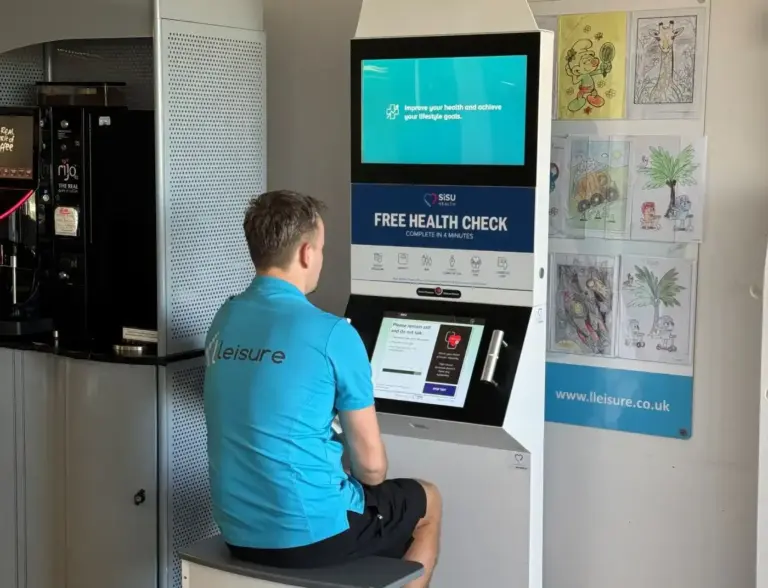



Transform prevention and early detection in your community
Work with us to deliver accessible, data-driven health solutions that reach underserved groups and support public health goals.